How Client Feedback Is Helping RefugePoint Improve Its Self-Reliance Food Support Programming
By RefugePoint’s Monitoring, Evaluation, and Learning (MEL), Program, and Communications teams
Listening to and acting on client feedback is helping RefugePoint adapt the ways its food support program supports self-reliance by offering clients greater flexibility and more tailored nutritional support.
Imagine living on less than one full meal per day. That’s the challenge facing a typical refugee household in Nairobi, upon entering RefugePoint’s self-reliance program. Because households often need to prioritize getting food on the table before they can pursue other needs, RefugePoint puts food support at the core of its Urban Refugee Protection Program (URPP). The food program provides stability and cushioning as families go through the program and is adjusted regularly based on client feedback. These adjustments, including adapting the food basket and offering cash in lieu of in-kind food items, have improved the program by making it more responsive to clients' needs and preferences.
Photo: Ben Littlejohn
FOOD ASSISTANCE IN A HOLISTIC SELF-RELIANCE PROGRAM FOR URBAN REFUGEE AND HOST COMMUNITY MEMBERS
More than 118,000 refugees and asylum seekers live in Nairobi, Kenya’s capital. Refugees in Nairobi face challenges unique to living in an urban environment, including receiving little to no support and struggling to access basic services, which are few and fragmented. Through the URPP, RefugePoint identifies refugees and Kenyan nationals experiencing extreme vulnerabilities and provides them with case management and comprehensive, wraparound services to help them stabilize, pursue income-generating activities, and work towards self-reliance. Stabilization services provide a ‘runway’ for clients to eventually reach the point when they are ready to engage in economic pursuits and achieve a degree of self-reliance—that is, to earn sufficient income to cover their essential needs and improve their quality of life without being fully dependent on assistance. Through the URPP, RefugePoint offers refugees and Kenyans access to support, including rent, essential household goods, physical and mental health services, education support, livelihoods support, and food.
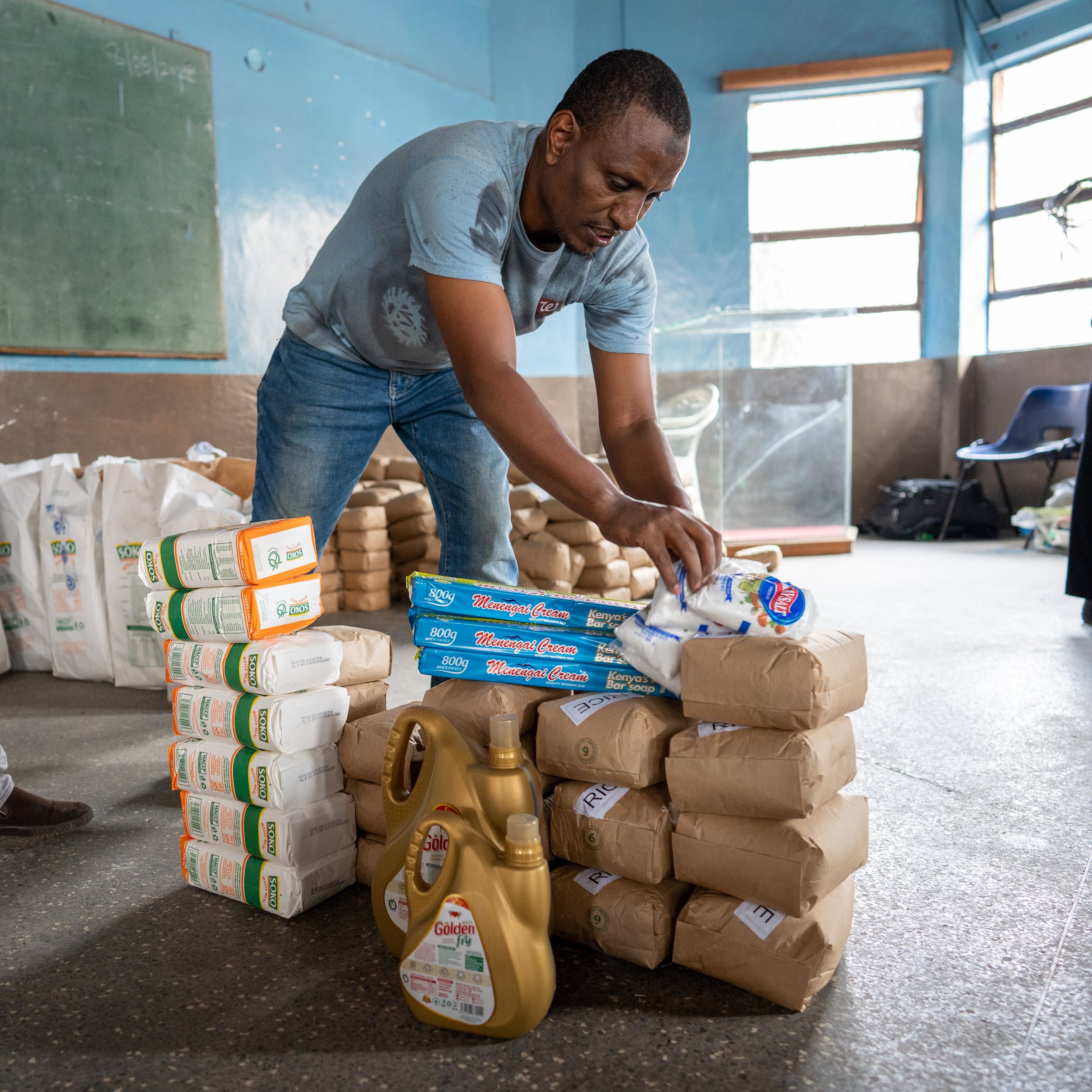
Food assistance is one of the most widely used services offered through the URPP and is also rated by clients as among the most impactful. Unlike many other nutritional-assistance programs, which distribute cash to support households to purchase food on their own, RefugePoint’s model has long prioritized the provision of physical food items, an approach clients consistently support through their feedback. Participants receive a basket of items—including rice, cornmeal, porridge, dried beans, salt, cooking oil, and bar soap— at monthly in-person distribution events held around Nairobi. These events also provide an opportunity for RefugePoint staff to share information with clients on health, nutrition, and safe food-handling. Client households typically receive food support for six months, though the period can be extended in cases of extreme need.
The data show that clients typically make strong progress on food security as they work towards self-reliance during their participation in the program. A recent cohort analysis found that, after just six months in the program, the typical household’s score on the Food Domain of the Self-Reliance Index (SRI), a composite measure of refugee self-reliance, jumped from 2.6 to 4.7 on a 5-point scale. In practice, that means a household that struggled to eat 1 full meal per day when joining the program was eating 2-3 full meals per day after 6 months in the program.
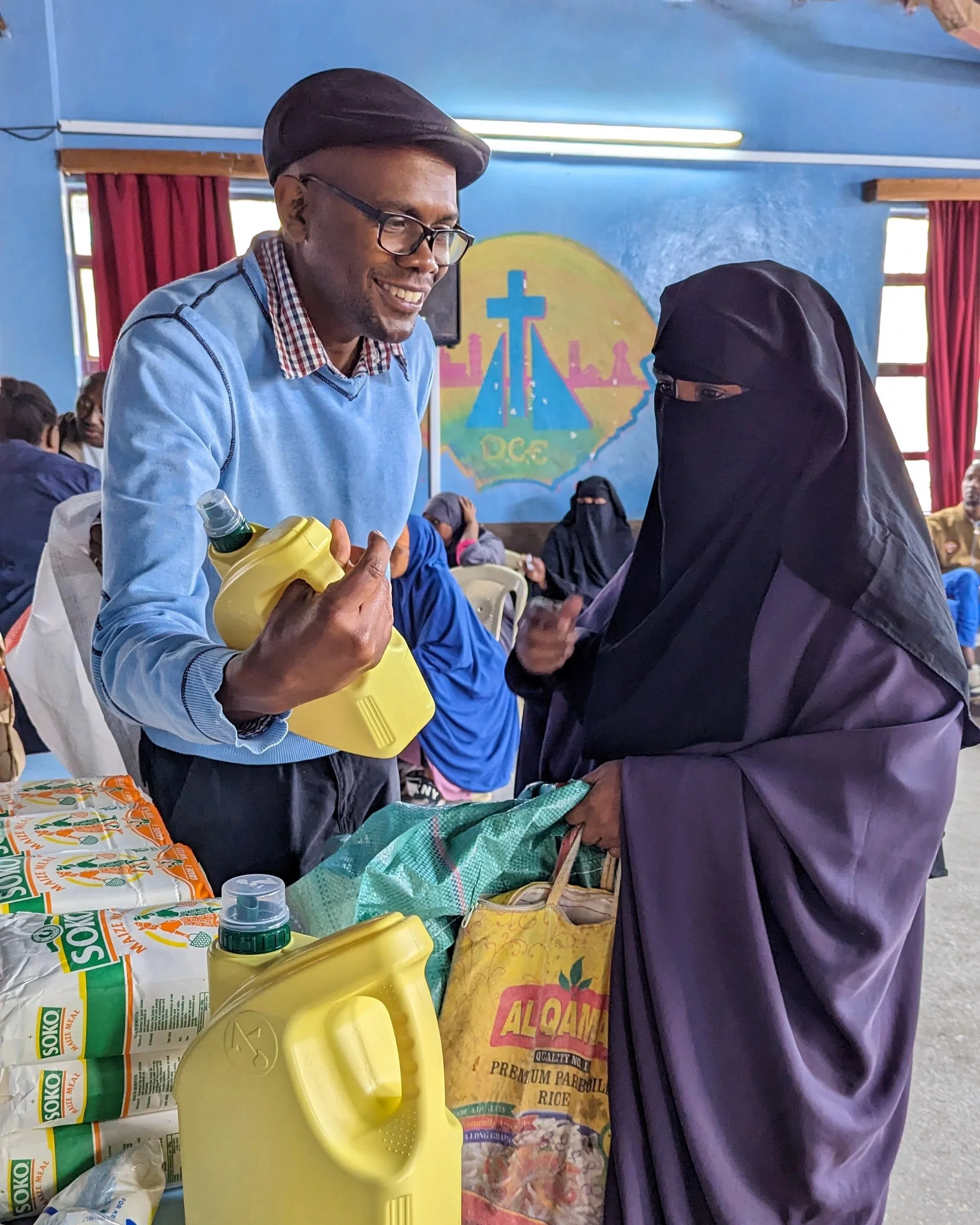
Photo: Jessica Masibo
LISTENING TO CLIENTS AND ACTING ON THEIR FEEDBACK
Providing clients with a selection of basic food items helps drive these gains in food security, but listening to client feedback and acting on it is part of this success as well. RefugePoint collects feedback on food assistance through client satisfaction surveys, client-case manager interactions, and engagement with clients during monthly food distribution events. These are just a few of the ways RefugePoint receives client feedback on the broader range of services it offers, as the agency seeks to listen to and act on what clients have to say across all areas of its work.
Client feedback guided a shift in the food program in early 2025, resulting in changes to the basket of items offered. Based on client-satisfaction survey results, the program recalibrated the standard food basket by reducing amounts of salt and porridge and shifting to a lower-cost brand of soap. With these savings, the program was able to respond to a recurring client demand for more rice, increasing the amount offered from 3 kgs per household member to 4 kgs.
A more fundamental shift came later in 2025, when households receiving food support were offered the chance to switch to a monthly cash payment in place of physical food items. Cash amounts offered were set based on the cost of procuring the physical food items the household would have received otherwise. Households have the flexibility to revert back to receiving physical food items after one month of receiving cash, if they prefer. Starting as a small pilot, the number of households opting for cash has grown steadily to over 29% of households participating in the food program today.
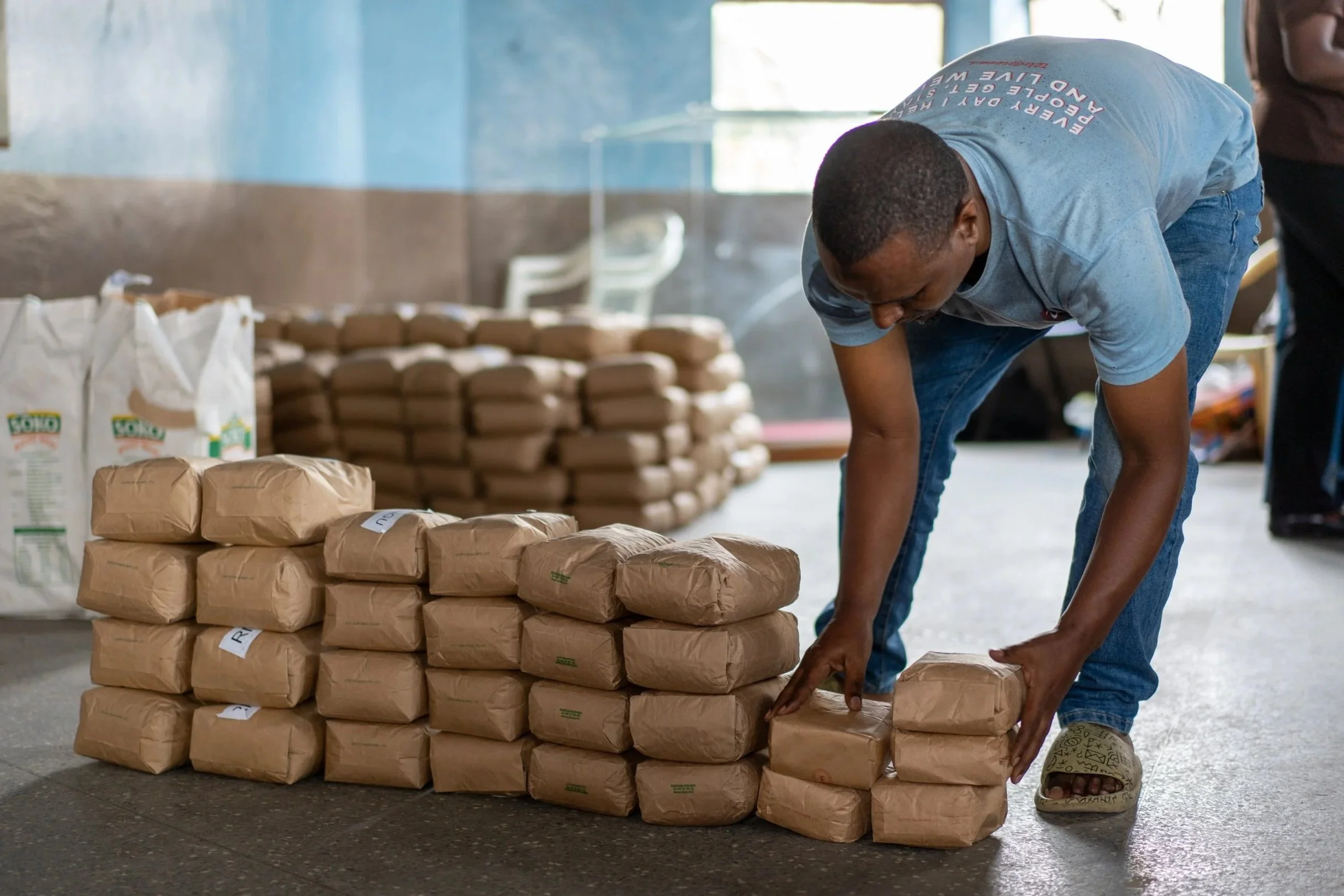
Photo: Tobin Jones
Through client satisfaction surveys and other feedback, lessons are emerging about why some clients prefer cash while the majority of participants continue to prefer physical food items. Among the majority of clients who receive the food basket, many appreciate both the quantity and quality of the food items provided by RefugePoint and the predictability of the monthly food distribution. Among clients opting for cash, most appreciate the freedom to purchase food items of their choice, when and where they like. This flexibility is especially helpful for clients with health concerns or specific dietary needs. However, some cash recipients have noted that cash support doesn’t go as far as they would like, due in part to rising living costs and the challenges of managing limited household budgets. RefugePoint procures food items from distributors at wholesale rates, meaning that households receiving cash may not be able to purchase as much food in a retail setting as they would have received in-kind.
TOWARDS A REFUGEE-CENTERED APPROACH TO SELF-RELIANCE PROGRAMMING
These are just two examples of how RefugePoint is acting on client feedback to improve its food programming. Responding to client needs and offering flexibility in service delivery is improving RefugePoint’s ability to support clients on their path to self-reliance and is an important part of putting the agency's value of refugee-centeredness into practice.
This blog post was published as part of the RSRI’s “12 Months, 12 Domains” campaign, a new learning and webinar series that takes a deeper look at the Self-Reliance Index (SRI), one domain at a time. Sign up for the RSRI newsletter to learn more →
