Fostering Long-Term Self-Reliance Outcomes Among Refugee Youth in U.S. Schools: Insights From SALaMA

By Alli Gillespie
Network Engagement Coordinator | Refugee Self-Reliance Initiative (RSRI)
Adolescence is a crucial stage of development that significantly influences long-term outcomes, yet it is often overlooked in discussions about refugee self-reliance. Young people aged 13 to 19 experience numerous changes as they explore their identities and interests, navigate the transformations of puberty, and adjust to evolving social relationships with peers, families, and communities. Since the roles and responsibilities of adolescents can vary widely across cultural contexts, it is essential to understand the support mechanisms available to those whose adolescence intersects with forced migration.
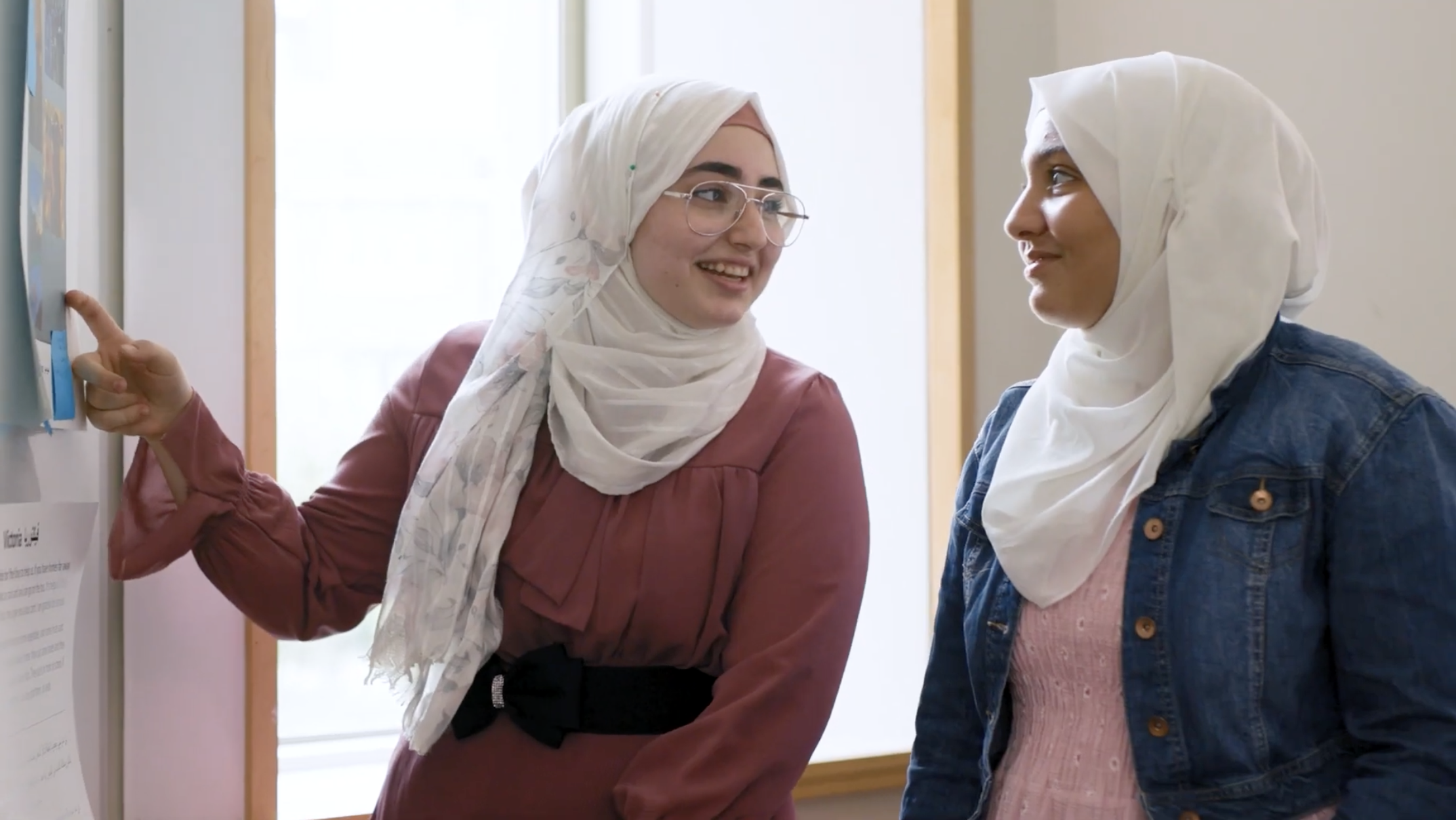
The Study of Adolescent Lives after Migration to America, or SALaMA, is a mixed-methods research initiative led by Dr. Lindsay Stark and Dr. Ilana Seff of Washington University in St. Louis and funded by Qatar Foundation International (QFI). The study partnered with local school districts and refugee resettlement agencies across various regions in the United States to assess the mental health and psychosocial well-being of high school students who had resettled as refugees from the Middle East and North Africa over the past decade.
Although SALaMA did not specifically measure self-reliance, it aimed to identify sources of daily stress in the lives of refugee students and to explore corresponding support mechanisms. The study provides valuable insights into resilience, highlighting effective school- and community-based practices designed to bolster adolescents’ well-being and adjustment to life in the U.S. Importantly, several of the study's findings correlate to domains of the Self-Reliance Index (SRI), the RSRI’s scored survey tool for measuring the progress of refugee households toward self-reliance. Each domain of the SRI 1) focuses on a household’s basic needs, resources, and sustainability, and 2) measures the conditions and assets that increase the likelihood that refugees will continue to meet their needs in the future.
Highlighted below are some of the approaches identified in the study that can be adapted to support refugee adolescents across education systems, providing a stronger foundation for household self-reliance opportunities and individual outcomes into adulthood.
Food (Domain 2)
In a participatory arm of the study with adolescent girls in Chicago, findings demonstrated that schools were vital in supporting refugee families’ food security through free lunch programs and the provision of take-home fruits and vegetables.
Education (Domain 3)
SALaMA showcased the central role of language learning in host environments where the languages spoken by the majority of students differ from those of newcomer populations. Language barriers–including how schools approached and supported language learning–were found to impact students’ social and academic functioning. Meanwhile, peer and educator support for using multiple languages in learning and exams was shown to improve students’ self-esteem, navigation of education systems, and connection to heritage culture.
Findings across study sites emphasized the importance of parental engagement in their children's education. Best practices for harnessing caregiver involvement included staffing cultural liaisons to foster trusted school-parent communication, visiting parents at home and at work, and offering sessions to support caregiver mental health and language learning.
Health (Domain 5)
Mental health and psychosocial well-being were key outcomes of interest in SALaMA. Findings across sites emphasized the need for holistic student support services, including strengthened partnerships between schools and local community-based organizations.
In exploring the impacts of COVID-19 on education systems in three U.S. cities, SALaMA highlighted the vital role of supporting teachers’ skills, capacity, and well-being. Teachers perceived newcomer students to be especially isolated during the remote learning stage of COVID, partly due to language barriers and family responsibilities, highlighting the importance of fostering strong student-family-school relationships during periods of remote learning.
Safety (Domain 6)
Findings from Chicago highlighted successful strategies for ensuring refugee students could move about their new cities comfortably and safely. For example, refugee students appreciated school efforts to familiarize them with public urban spaces through field trips to surrounding neighborhoods, which provided more experiential learning. Schools also provided students with bus cards, enabling them to access local public transportation.
An analysis of participatory focus group discussions with students across three cities in SALaMA found that students valued a safe school environment in which counselors were available for psychosocial support, school staff made proactive efforts to prevent bullying, and belonging was fostered through inclusive curricula and extracurricular team activities.
Social Capital (Domain 12)
Schools in several SALaMA contexts were lauded by study participants for promoting cross-cultural friendships and strengthening relationships among newcomers who had arrived in different years, as well as between newcomers and second-generation Arab American students.
Opportunities for social inclusion tended to vary depending on the relative ethnic and religious diversity of each study site. Students in the Chicago arm of the study appreciated the diversity of their school’s student bodies and the ability to practice their religion alongside others at the city’s public interfaith temple. Meanwhile, students in the Detroit Metropolitan Area valued their large yet tight-knit Arab and Muslim community, which reminded them of their home countries and helped foster a sense of belonging.
One analysis of SALaMA data found that students’ social networks and connections, awareness of structural challenges facing their communities, and sense of agency all contributed to a greater sense of empowerment in their communities.
An evaluation of SALaMA’s school-based “Forward with Peers” program revealed that programming that provides a safe space for displaced adolescents to discuss topics such as cultural awareness, mental health, computer skills, and career exploration among peers can strengthen their resilience, competencies, and future goals.
SALaMA generated valuable insights into school-based strategies aimed at enhancing the well-being of newcomer adolescents. These efforts extended beyond supporting school enrollment; they also contributed to fostering long-term self-reliance in critical domains such as food security, health, safety, and social capital.
Policies that support well-resourced schools within both municipal and national education systems can play a pivotal role in advancing refugee self-reliance. Meanwhile, holistic programming that supports language learning, caregiver engagement, navigation of new urban environments, and the fostering of social connections can significantly enhance the capacity of entire households and communities to thrive on pathways toward self-reliance as they rebuild their lives following displacement.
This blog post was published as part of the RSRI’s “12 Months, 12 Domains” campaign, a new learning and webinar series that takes a deeper look at the Self-Reliance Index (SRI), one domain at a time. Sign up for the RSRI newsletter to learn more →