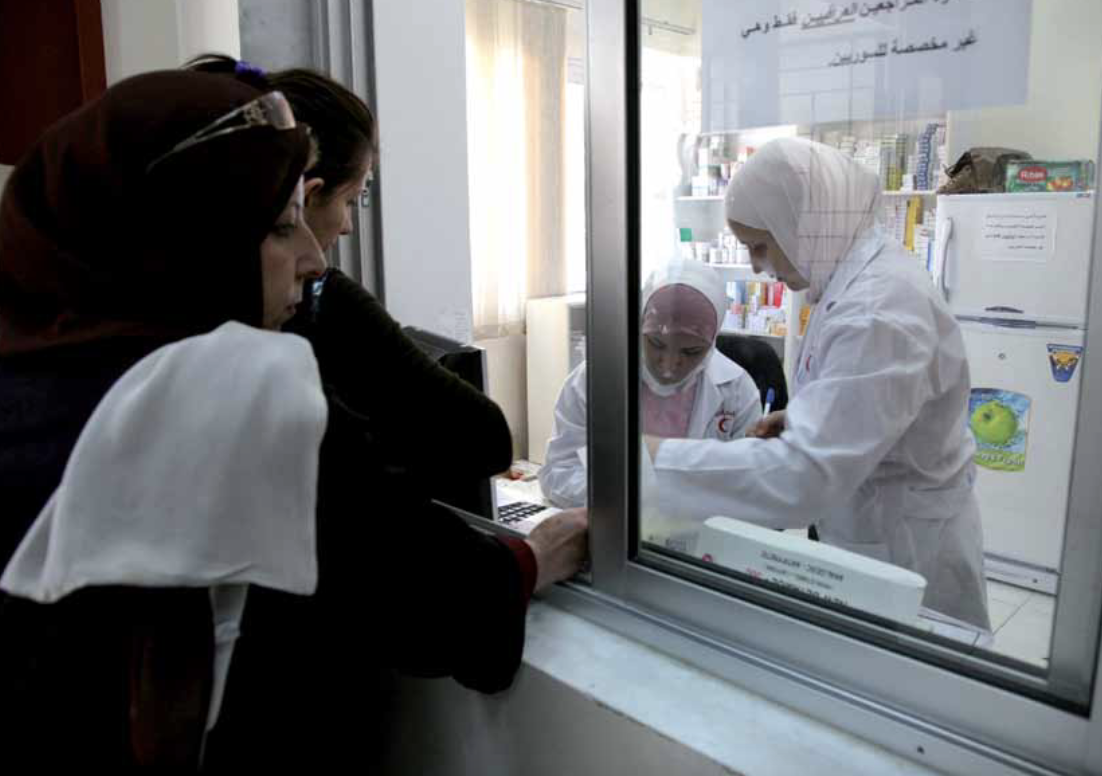
The Public Health and HIV (PHHIV ) section produced this operational guidance for public health programming in urban settings for refugees and asylum seekers (henceforth referred to as refugees) to provide practical guidance that can be adapted according to differing contexts. It draws on best practices and illustrative examples from cities and towns where the UN Refugee Agency (UNHCR) is currently working with urban refugees. The public health role of UNHCR is more complex and less well defined in non-camp settings. There are multiple health service providers in cities, including state, private, local, and international non-governmental organizations (NGOs). UNHCR’s aim in urban settings is for refugees to access quality health services at a level similar to that of nationals. UNHCR’s major role in urban settings is to advocate for and facilitate quality health services to be available to and accessed by refugees. While working with government and city authorities, UNHCR engages with a wide range of actors promoting shared responsibility and advocates for an appropriate resource base to enable the needs of refugees to be met.
The UNHCR policy on refugee protection and solutions in urban areas elaborates a three-pronged approach - advocacy, support, and monitoring & evaluation. UNHCR advocates on behalf of refugees to ensure that authorities make public services, including health services, available at similar or lower costs to those of nationals. UNHCR supports and facilitates integration into and the strengthening of the national public health system. This may include direct funding or indirect support via partners. UNHCR assesses, monitors, and evaluates the health, nutritional, educational, and economic status of refugees, ensuring needs are met in line with accepted standards and that quality services are available and accessible.
The health status of refugees will not be improved by health services alone; the underlying determinants of health must also be addressed by improving livelihoods and income, food security and nutrition, housing, education and access to water and sanitation services. UNHCR staff also engages in multi-sector, multi-agency mechanisms that address the underlying causes of vulnerability and ill health of the urban poor including refugees. Specific safety nets may need to be supported by UNHCR to support refugees most in need and to improve their economic potential.
For this document, public health refers to preventive and curative health and nutrition services. Limited reference in this document is made to food security, water, sanitation and hygiene promotion. Public health principles, standards and indicators previously developed in UNHCR’s Public Health Guidance and Principles are adapted to provide clear guidance for UNHCR staff responsible for programme support and monitoring in urban situations. The focus of this operational guidance is on refugees and asylum seekers, but in some contexts it may apply to stateless persons, internally displaced persons and returnee settings. This guidance is relevant to both low and middle-income countries with a UNHCR presence. It is designed primarily for the urban context but is applicable to all settings including non-camp rural settings.