The refugee self-reliance agenda is marked by tensions and contradictions, echoing wider incoherence in the international refugee regime. We explore these through the philosophical concept of paradoxes. Paradoxes allow for multiple interests and narratives to be simultaneously ‘true’, leading to refugee policy outcomes that are often incoherent by omission instead of commission. To illustrate this, we draw on recent empirical studies to examine how increased access to digital technology can paradoxically lead to less access and agency in relation to health and financial services for refugees and less integration into host community life. We call these the paradox of information overload and the paradox of regulatory systems. We close with discussion of how paradoxes can a conceptual tool for policy makers and researchers to identify root causes of refugee policy incoherence, and how spaces of action can be created to ‘manage the paradox’.
Recent Resources
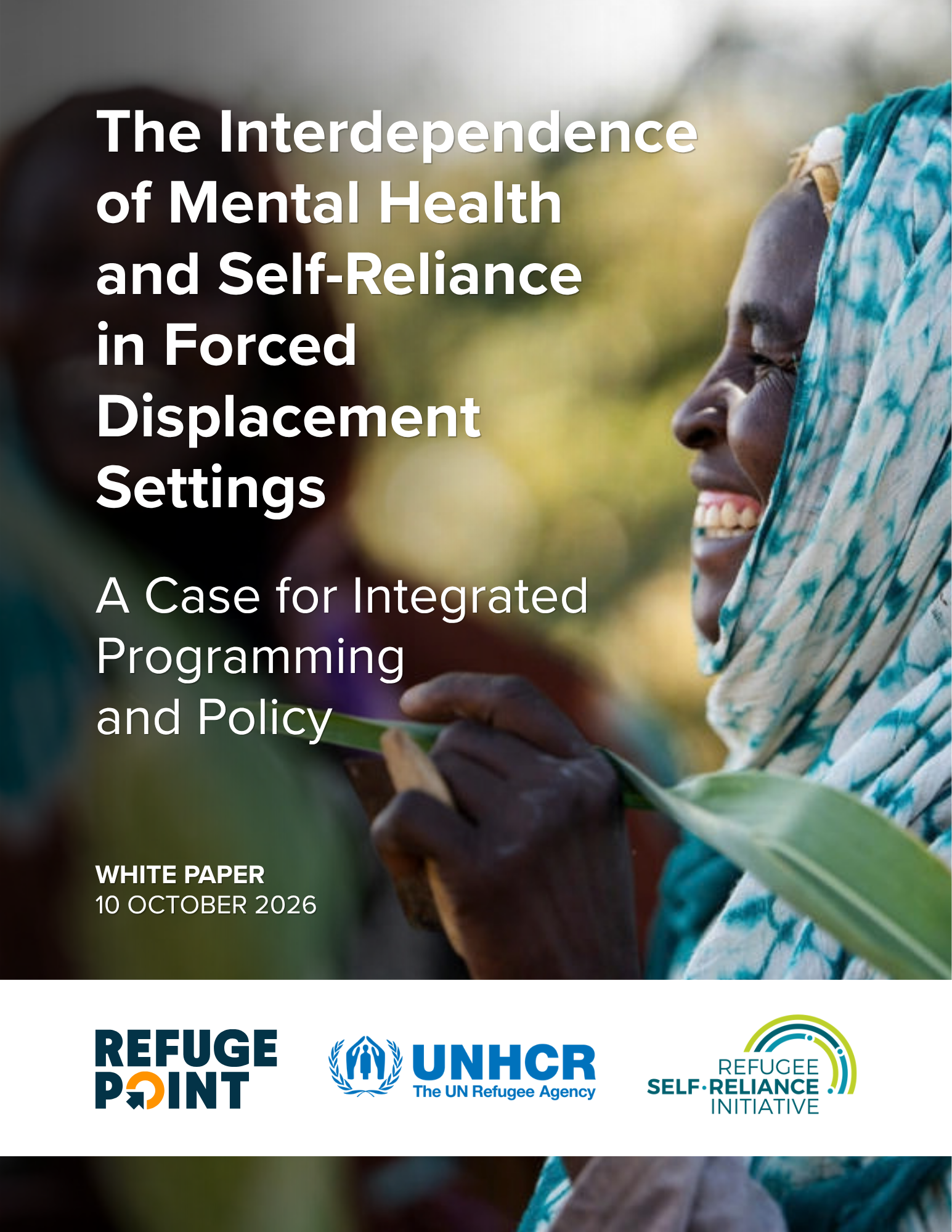
Publication Year: 2026, Organizations: RefugePoint, Organizations: UNHCR, Organizations: Refugee Self-Reliance Initiative, Tags: Mental Health and Pyschosocial Wellbeing, Tags: Holistic Programming, Resource Type: Programmatic, Theme: Social Inclusion, Theme: Programming, RSRI Publications
Publication Year: 2026, Organizations: RefugePoint, Organizations: UNHCR, Organizations: Refugee Self-Reliance Initiative, Tags: Mental Health and Pyschosocial Wellbeing, Tags: Holistic Programming, Resource Type: Programmatic, Theme: Social Inclusion, Theme: Programming, RSRI Publications
Publishing Organizations: RefugePoint, UNHCR, Refugee Self-Reliance Initiative
Authors: Sonasha Braxton, Anna Nicol, and Simar Singh (RefugePoint); Awa Ahmed Haji Omar, Sofia Casas, and Peter Ventevogel (UNHCR); Alli Gillespie and Shelby Quackenbush (RSRI)
Organizations: Refugee Self-Reliance Initiative, Refugee Self-Reliance Initiative, RSRI Publications, Tags: 50 by 35, Publication Year: 2026
Organizations: Refugee Self-Reliance Initiative, Refugee Self-Reliance Initiative, RSRI Publications, Tags: 50 by 35, Publication Year: 2026
Publishing Organizations: Refugee Self-Reliance Initiative
Resource Type: Academic, Organizations: New Political Economy, Country: Kenya, Region: Africa, Theme: Policy, Population: Refugees, Publication Year: 2020
Resource Type: Academic, Organizations: New Political Economy, Country: Kenya, Region: Africa, Theme: Policy, Population: Refugees, Publication Year: 2020
Publishing Organizations: New Political Economy
Authors: Ali Bhagat
Organizations: International Trade Forum, Organizations: International Trade Centre, Organizations: Brookings Institute, Resource Type: Academic, Country: Turkey, Region: Europe, Theme: Policy, Population: Refugees, Publication Year: 2020, Tags: Economic Inclusion
Organizations: International Trade Forum, Organizations: International Trade Centre, Organizations: Brookings Institute, Resource Type: Academic, Country: Turkey, Region: Europe, Theme: Policy, Population: Refugees, Publication Year: 2020, Tags: Economic Inclusion
Publishing Organizations: International Trade Forum; Brookings Institute
Authors: Kemal Kirişci

Organizations: National Library of Medicine, Organizations: Washington University in St. Louis, Resource Type: Academic, Theme: Measurement, Population: Refugees, Population: IDPs, Publication Year: 2021, Country: Kenya, Country: Mexico
Organizations: National Library of Medicine, Organizations: Washington University in St. Louis, Resource Type: Academic, Theme: Measurement, Population: Refugees, Population: IDPs, Publication Year: 2021, Country: Kenya, Country: Mexico
Publishing Organizations: National Library of Medicine; Brown School, Washington University in St. Louis
Authors: Ilana Seff, Kellie Leeson, Lindsay Stark
Resource Type: Academic, Theme: Measurement, Publication Year: 2022, Population: Refugees, Organizations: RefugePoint, Organizations: Women's Refugee Commission, Organizations: Forced Migration Review
Resource Type: Academic, Theme: Measurement, Publication Year: 2022, Population: Refugees, Organizations: RefugePoint, Organizations: Women's Refugee Commission, Organizations: Forced Migration Review
Publishing Organizations: Forced Migration Review; RefugePoint; Women’s Refugee Commission
Authors: Kellie C Leeson, Amy Slaughter, and Dale Buscher
Organizations: Journal of Immigrant & Refugee Studies, Publication Year: 2025, Resource Type: Academic, Tags: Economic Inclusion, Tags: Capacity Building, Tags: Social Inclusion, Tags: Mental Health & Psychosocial Wellbeing, Theme: Impact, Population: Refugees, Tags: Urban, Region: East Africa
Organizations: Journal of Immigrant & Refugee Studies, Publication Year: 2025, Resource Type: Academic, Tags: Economic Inclusion, Tags: Capacity Building, Tags: Social Inclusion, Tags: Mental Health & Psychosocial Wellbeing, Theme: Impact, Population: Refugees, Tags: Urban, Region: East Africa
Publishing Organizations: Journal of Immigrant & Refugee Studies
Authors: Habiba Ibrahim; Jacinta Mutie; Mohamed Ibrahim; Anna Marie Ronning; Makayla Gille
Organizations: Cambridge University Press, Country: Uganda, Tags: Food Aid, Tags: Disability Inclusion, Theme: Policy, Resource Type: Academic, Population: Refugees, Publication Year: 2022, Organizations: International African Institute
Organizations: Cambridge University Press, Country: Uganda, Tags: Food Aid, Tags: Disability Inclusion, Theme: Policy, Resource Type: Academic, Population: Refugees, Publication Year: 2022, Organizations: International African Institute
Publishing Organizations: Cambridge University Press on behalf of the International African Institute
Authors: Maria-Theres Schuler

Resource Type: Academic, Theme: Policy, Population: Refugees, Publication Year: 2025, Tags: Humanitarian-Development Nexus, Tags: Protection, Tags: Social Inclusion
Resource Type: Academic, Theme: Policy, Population: Refugees, Publication Year: 2025, Tags: Humanitarian-Development Nexus, Tags: Protection, Tags: Social Inclusion
Publishing Organizations: The Journal of Refugee Studies
Authors: Judith Kohlenberger, Charles Martin-Shields, Evan Easton-Calabria
Resource Type: Policy, Resource Type: Programmatic, Theme: Policy, Theme: Programming, Population: Refugees, Publication Year: 2011, Organizations: UNHCR, Tags: Urban, Tags: Health, Tags: Protection, Tags: Humanitarian-Development Nexus
Resource Type: Policy, Resource Type: Programmatic, Theme: Policy, Theme: Programming, Population: Refugees, Publication Year: 2011, Organizations: UNHCR, Tags: Urban, Tags: Health, Tags: Protection, Tags: Humanitarian-Development Nexus
Publishing Organizations: UNHCR
