SRI E-Modules Now Available in Arabic!

Exciting news! We’ve just launched our Self-Reliance Index e-learning modules in Arabic.

أخبار سارة! لقد أطلقنا للتو وحدات التعلُّم الإلكتروني لمؤشِّر الاعتماد على الذات باللغة العربية.

Our Self-Reliance Index is the first global tool for measuring the progress of refugee households toward self-reliance - and we even provide a comprehensive list of training options to help you get set up.

يُعَد مؤشِّر الاعتماد على الذات الخاص بنا أول أداة عالمية لقياس مستوى التُقدُّم لدى أسر اللاجئين نحو الاعتماد على ذاتهم، كما أنَّنا نوفر أيضًا قائمة شاملة بخيارات التدريب لمساعدتك على الإعداد لذلك.

These modules are a comprehensive training tool to help you understand and utilize the SRI, the first global tool of its kind that measures the progress of refugee households towards self-reliance.

تُعَد هذه الوحدات أداة تدريب شاملة لمساعدتك على فهم واستخدام مؤشِّر الاعتماد على الذات (SRI) التي أصبحت الأداة العالمية الأولى من نوعها التي تقيس مستوى التقدُّم المُحرَز لدى أُسر اللاجئين نحو الاعتماد على الذات.

E-learning modules are also available in English, Spanish, and French.

تتوفَّر وحدات التعليم الإلكتروني أيضًا باللغات الإنجليزية والإسبانية والفرنسية.

Reflecting on 2022: A Letter from the Refugee Self-Reliance Initiative

Dear friends,

We are filled with gratitude as we look back on all that the Refugee Self-Reliance Initiative and our partners accomplished in 2022. Together, we have made great strides in bolstering opportunities for refugees around the world to achieve self-reliance – and we look forward to seeing what more we can achieve this year.

Thanks to your support and engagement this past year, the Refugee Self-Reliance Initiative:

As we reflect on these accomplishments, we look forward to seeing how self-reliance can become an even stronger tenant of humanitarian aid in 2023. By working together as a community, we can continue to help build better lives for refugees and other forcibly displaced populations.

We invite you to stay in touch with us as we embark upon this new year - click here to sign up for our newsletter and follow us on Instagram, LinkedIn, and Twitter.

Best wishes,

Refugee Self-Reliance Initiative and US State Department Deliver Joint Statement at 2022 UNHCR High Commissioner's Dialogue

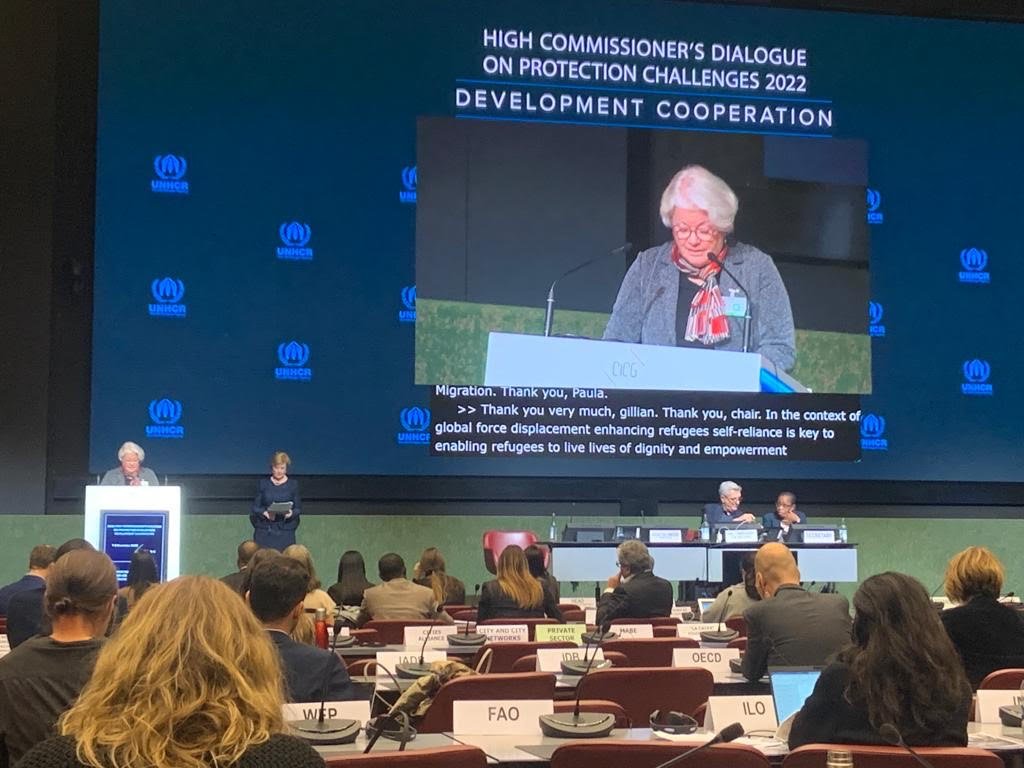
On December 8, 2022, the Refugee Self-Reliance Initiative (RSRI) and US State Department’s Bureau of Population, Refugees and Migration (PRM) delivered a joint statement at the 2022 UNHCR High Commissioner’s Dialogue, highlighting key opportunities to move the needle on self-reliance outcomes for refugees and forcibly displaced populations. Read the full statement here, and view the video clip below.

Paula Reed Lynch (Director, Office of Policy and Resource Planning, U.S. Department of State) presented a joint statement from RSRI and PRM in the plenary of the 2022 UNHCR High Commissioner’s Dialogue.

This statement was based on the outcomes of the Better Lives Now Innovation Labs co-convened by RSRI and PRM to produce recommendations informing pledging around self-reliance at the 2023 Global Refugee Forum. Representatives from academia, foundations, NGOs, research organizations, refugee-led organizations, multilateral institutions, governments (host countries and donors), and the private sector took part in each lab.

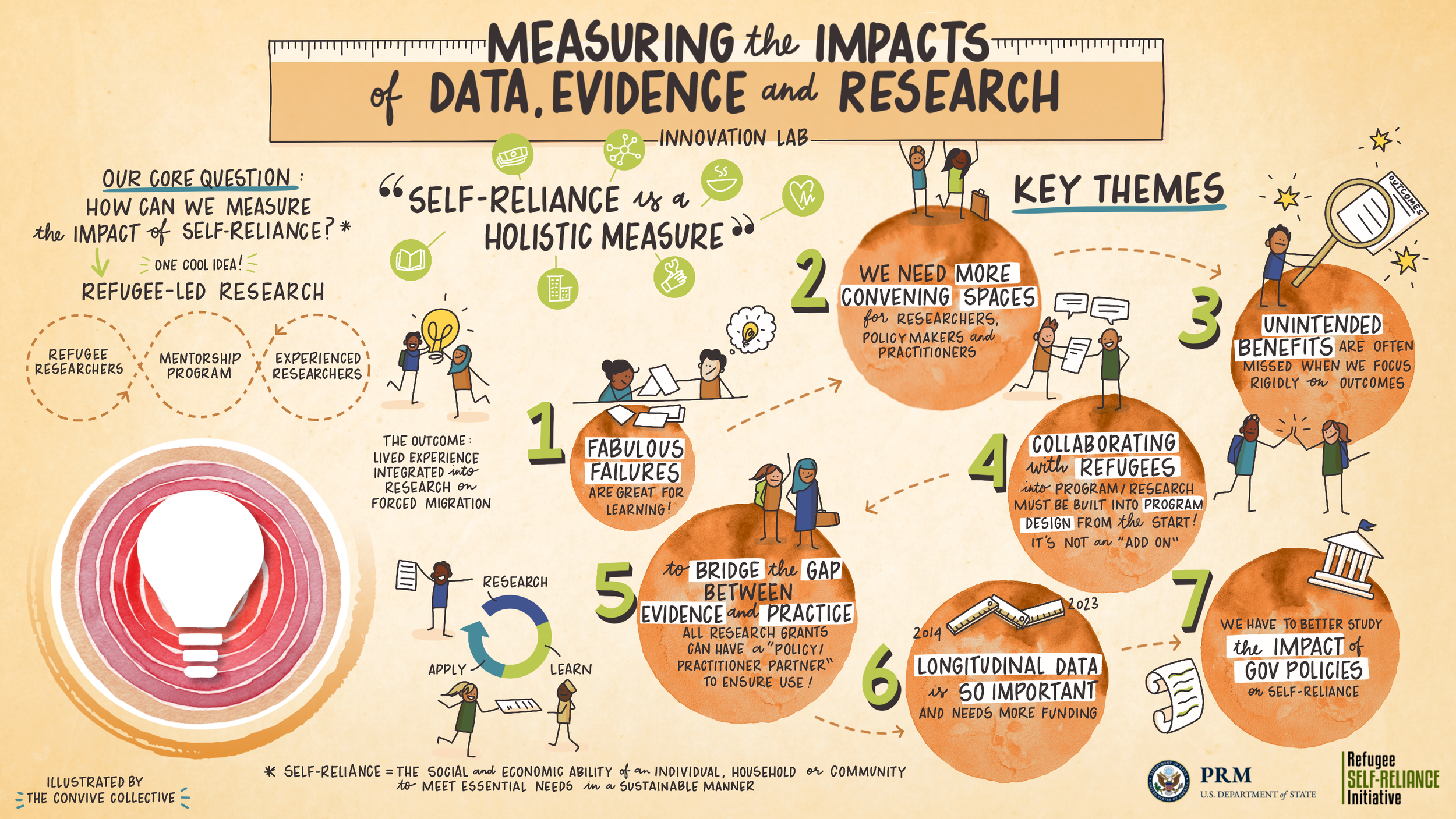
Key takeaways incorporated into the joint statement include recommendations on data and evidence, fostering collaboration, and policy. View the highlights in the illustrations below, or view the full report by clicking here.

Madiha Ali Delivers NGO Statement About Self-Reliance at the Executive Committee of the High Commissioner’s Programme

On October 13, Madiha Ali, a dynamic refugee advocate and a member of the RSRI Steering Committee, delivered the NGO Statement for the general debate for the Executive Committee of the High Commissioner’s Programme (ExCom) in Geneva, Switzerland. The full written statement can be accessed here.

Madiha Ali, a dynamic refugee advocate (right) met Filippo Grandi, the United Nations High Commissioner for Refugees at the 73rd session of the Executive Committee of UNHCR this week in Geneva. Madiha is engaging on the world stage in policies and practices that matter to refugees – and her community – at the grassroots level. Today, Madiha will deliver one of only two civil society statements that will be presented at the Executive Committee of the High Commissioner’s Programme in Geneva, Switzerland.

The statement highlighted that at this time of unprecedented global displacement—with a staggering 100 million people who’ve been forced to flee their homes—refugee self-reliance models need to be the norm, rather than the exception when planning assistance and response to ongoing crises. It was one of only two civil society statements that were presented at ExCom, which is an annual meeting of the UNHCR attended by many member state delegations and civil society representatives. The RSRI is a global multi-stakeholder collaboration co-founded and hosted by RefugePoint that aims to reach five million refugees in five years with programming that puts them on a path to self-reliance and reshapes the humanitarian response paradigm away from emergency aid.

Global forced displacement is at its highest recorded, with over 30 million people who have fled their countries (and more than double that number displaced within their own country). Coupled with the extended length of displacement — often 20 or more years — and the lack of sustainable solutions for refugees — less than 3% return home annually — this growing global challenge is leaving increasing numbers of people living in limbo. Most refugees say they want to “stand on their own feet” — to take care of their own needs and those of their family. They request support to build independent lives in their new homes, whether their stay is temporary or permanent.

Self-reliance is recognized as a key solution to the global displacement crisis, with several recent high-level inter-governmental initiatives emphasizing the need to enhance self-reliance opportunities for refugees, including the 2030 Agenda for Sustainable Development and the 2018 Global Compact on Refugees. Despite this, the prevailing humanitarian response has focused on emergency aid. According to the former UN Secretary-General, Ban Ki-moon, this leaves millions of refugees “trapped in dependency on short-term aid that keeps them alive but falls short of ensuring their safety, dignity, and ability to thrive and be self-reliant over the long term.”

Self-reliance involves helping refugees to meet their own essential needs so that they can live in safety and dignity, without the need to rely on humanitarian aid. The statement will call out examples of self-reliance initiatives already being rolled out and will make policy recommendations targeting key stakeholders, including the UNHCR, member states, and humanitarian actors.

Now more than ever, we need long-term solutions for refugees. The statement that Madiha Ali delivered on October 13 highlighted the importance of self-reliance as one of these long-term solutions.
This blog post was originally published on RefugePoint’s website. You can read the original post here.

Lives and Livelihoods: Supporting Resilience with Data

Lives and Livelihoods: Supporting Resilience with Data

We see the Self-Reliance Index (SRI) as filling a critical gap in building an evidence base of “what works” in improving the health and welfare of refugee households. It will give us the data we need to improve our own programs, inform resource allocation, and scale effective approaches. As the global knowledge base increases through broad use of the SRI, so too will our ability to protect both the lives and livelihoods of refugees and their host communities.