The use of cash transfer programmes in humanitarian contexts is growing. In comparison to in-kind assistance, cash transfers are widely praised for enhancing autonomy, reducing costs, and boosting local markets. There are various modalities of cash transfer, from food vouchers to mobile money, and cash. Yet, evidence on the relative merits of these models is scarce. Using first-hand data from 896 refugee households living in the Kalobeyei settlement in Kenya, we make use of a ‘natural experiment’ to study the relative effects of restricted versus unrestricted cash transfers to refugees. Our research shows that the switch to unrestricted cash transfers has positive impacts on asset holding and subjective well-being. Households receiving unrestricted cash transfers also appear to be less likely to engage in the costly practice of reselling food for non-food items. There is some evidence that unrestricted transfers may lead to higher expenditure on alcohol and tobacco, however this relates to only a limited proportion of households and a small proportion of their budget. Both modalities of cash-based assistance are associated with indebtedness. A staggering 89% of sampled households are indebted towards their retailers, and cash transfers are used as a form of collateral by retailers to guarantee debt repayment. Indebted households have low negotiating power, face high prices, and are prevented from selecting between competing retailers. Facing both the uncertainty of food insecurity and the social pressures exerted by their creditors, many indebted refugees are left with feelings of anxiety, helplessness, and fear. This report discusses the pros and cons of various policy options for addressing the problem of indebtedness, including debt repayment schemes or debt relief, social safety nets, more frequent transfers, training, and monitoring.
Recent Resources
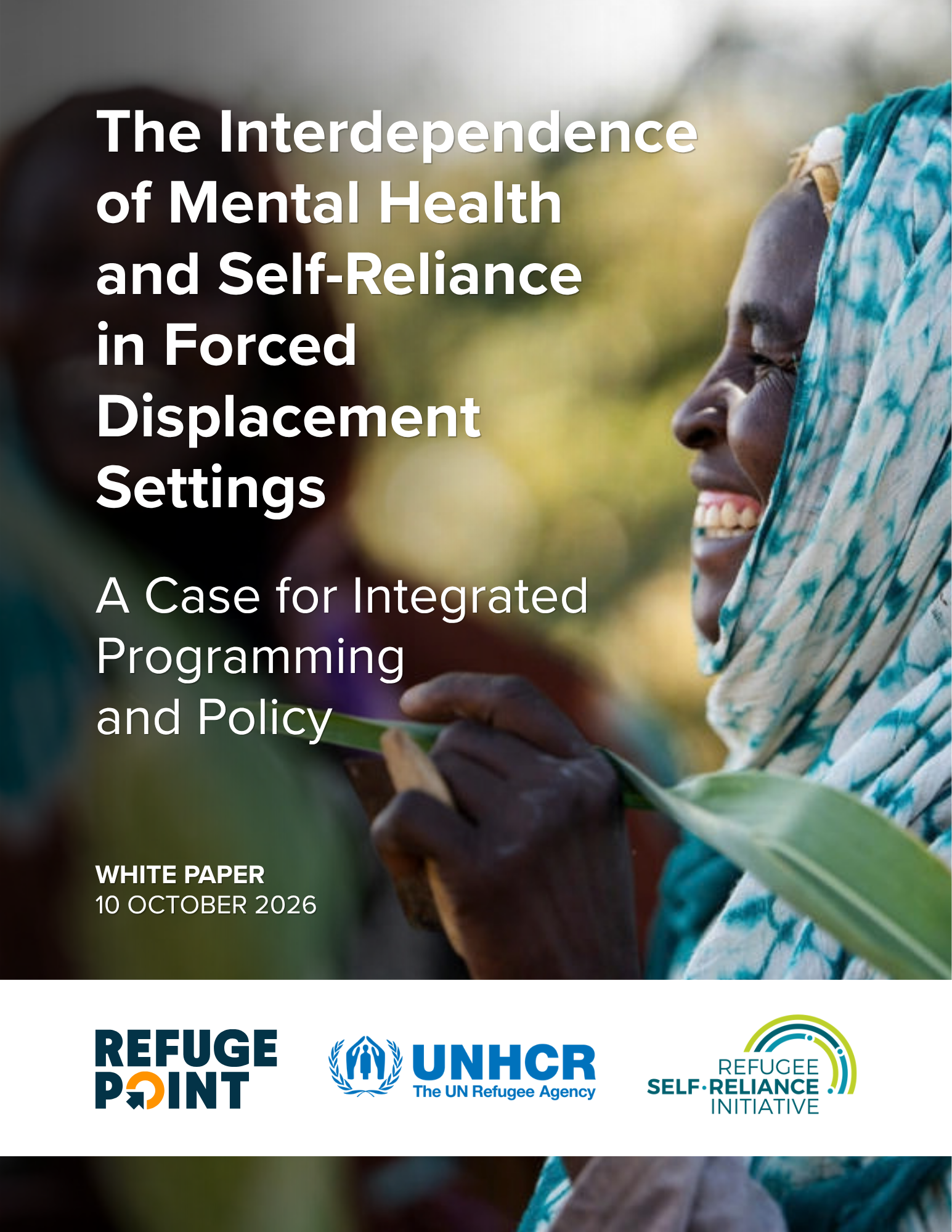
Publication Year: 2026, Organizations: RefugePoint, Organizations: UNHCR, Organizations: Refugee Self-Reliance Initiative, Tags: Mental Health and Pyschosocial Wellbeing, Tags: Holistic Programming, Resource Type: Programmatic, Theme: Social Inclusion, Theme: Programming, RSRI Publications
Publication Year: 2026, Organizations: RefugePoint, Organizations: UNHCR, Organizations: Refugee Self-Reliance Initiative, Tags: Mental Health and Pyschosocial Wellbeing, Tags: Holistic Programming, Resource Type: Programmatic, Theme: Social Inclusion, Theme: Programming, RSRI Publications
Publishing Organizations: RefugePoint, UNHCR, Refugee Self-Reliance Initiative
Authors: Sonasha Braxton, Anna Nicol, and Simar Singh (RefugePoint); Awa Ahmed Haji Omar, Sofia Casas, and Peter Ventevogel (UNHCR); Alli Gillespie and Shelby Quackenbush (RSRI)
Organizations: Refugee Self-Reliance Initiative, Refugee Self-Reliance Initiative, RSRI Publications, Tags: 50 by 35, Publication Year: 2026
Organizations: Refugee Self-Reliance Initiative, Refugee Self-Reliance Initiative, RSRI Publications, Tags: 50 by 35, Publication Year: 2026
Publishing Organizations: Refugee Self-Reliance Initiative
Resource Type: Academic, Organizations: New Political Economy, Country: Kenya, Region: Africa, Theme: Policy, Population: Refugees, Publication Year: 2020
Resource Type: Academic, Organizations: New Political Economy, Country: Kenya, Region: Africa, Theme: Policy, Population: Refugees, Publication Year: 2020
Publishing Organizations: New Political Economy
Authors: Ali Bhagat
Organizations: International Trade Forum, Organizations: International Trade Centre, Organizations: Brookings Institute, Resource Type: Academic, Country: Turkey, Region: Europe, Theme: Policy, Population: Refugees, Publication Year: 2020, Tags: Economic Inclusion
Organizations: International Trade Forum, Organizations: International Trade Centre, Organizations: Brookings Institute, Resource Type: Academic, Country: Turkey, Region: Europe, Theme: Policy, Population: Refugees, Publication Year: 2020, Tags: Economic Inclusion
Publishing Organizations: International Trade Forum; Brookings Institute
Authors: Kemal Kirişci

Organizations: National Library of Medicine, Organizations: Washington University in St. Louis, Resource Type: Academic, Theme: Measurement, Population: Refugees, Population: IDPs, Publication Year: 2021, Country: Kenya, Country: Mexico
Organizations: National Library of Medicine, Organizations: Washington University in St. Louis, Resource Type: Academic, Theme: Measurement, Population: Refugees, Population: IDPs, Publication Year: 2021, Country: Kenya, Country: Mexico
Publishing Organizations: National Library of Medicine; Brown School, Washington University in St. Louis
Authors: Ilana Seff, Kellie Leeson, Lindsay Stark
Resource Type: Academic, Theme: Measurement, Publication Year: 2022, Population: Refugees, Organizations: RefugePoint, Organizations: Women's Refugee Commission, Organizations: Forced Migration Review
Resource Type: Academic, Theme: Measurement, Publication Year: 2022, Population: Refugees, Organizations: RefugePoint, Organizations: Women's Refugee Commission, Organizations: Forced Migration Review
Publishing Organizations: Forced Migration Review; RefugePoint; Women’s Refugee Commission
Authors: Kellie C Leeson, Amy Slaughter, and Dale Buscher
Organizations: Journal of Immigrant & Refugee Studies, Publication Year: 2025, Resource Type: Academic, Tags: Economic Inclusion, Tags: Capacity Building, Tags: Social Inclusion, Tags: Mental Health & Psychosocial Wellbeing, Theme: Impact, Population: Refugees, Tags: Urban, Region: East Africa
Organizations: Journal of Immigrant & Refugee Studies, Publication Year: 2025, Resource Type: Academic, Tags: Economic Inclusion, Tags: Capacity Building, Tags: Social Inclusion, Tags: Mental Health & Psychosocial Wellbeing, Theme: Impact, Population: Refugees, Tags: Urban, Region: East Africa
Publishing Organizations: Journal of Immigrant & Refugee Studies
Authors: Habiba Ibrahim; Jacinta Mutie; Mohamed Ibrahim; Anna Marie Ronning; Makayla Gille
Organizations: Cambridge University Press, Country: Uganda, Tags: Food Aid, Tags: Disability Inclusion, Theme: Policy, Resource Type: Academic, Population: Refugees, Publication Year: 2022, Organizations: International African Institute
Organizations: Cambridge University Press, Country: Uganda, Tags: Food Aid, Tags: Disability Inclusion, Theme: Policy, Resource Type: Academic, Population: Refugees, Publication Year: 2022, Organizations: International African Institute
Publishing Organizations: Cambridge University Press on behalf of the International African Institute
Authors: Maria-Theres Schuler
Resource Type: Academic, Theme: Policy, Population: Refugees, Publication Year: 2025, Tags: Humanitarian-Development Nexus, Tags: Protection, Tags: Social Inclusion
Resource Type: Academic, Theme: Policy, Population: Refugees, Publication Year: 2025, Tags: Humanitarian-Development Nexus, Tags: Protection, Tags: Social Inclusion
Publishing Organizations: The Journal of Refugee Studies
Authors: Judith Kohlenberger, Charles Martin-Shields, Evan Easton-Calabria
Resource Type: Policy, Resource Type: Programmatic, Theme: Policy, Theme: Programming, Population: Refugees, Publication Year: 2011, Organizations: UNHCR, Tags: Urban, Tags: Health, Tags: Protection, Tags: Humanitarian-Development Nexus
Resource Type: Policy, Resource Type: Programmatic, Theme: Policy, Theme: Programming, Population: Refugees, Publication Year: 2011, Organizations: UNHCR, Tags: Urban, Tags: Health, Tags: Protection, Tags: Humanitarian-Development Nexus
Publishing Organizations: UNHCR
