Reimagining Assistance as a Runway to Refugee Self-Reliance

By Anna Nicol
Associate Director of Host Country Solutions | RefugePoint
A misconception in humanitarian response is that humanitarian assistance and long-term self-reliance approaches exist on opposite ends of a spectrum. In practice, this dichotomy risks leading to two damaging outcomes: prolonged delivery of short-term emergency aid that keeps families in perpetual survival mode, or premature withdrawal of support before refugees are ready to transition off assistance as aid budgets shrink.
In reality, assistance and sustainable self-reliance are complementary. Assistance, when provided strategically, can serve as both a safety net and a springboard, supporting refugee households with the stability they need to exercise greater autonomy over their futures and rebuild their lives in their new communities. The global humanitarian community, building on the longer-term visions established by the Global Compact on Refugees and now UNHCR’s 50 by 35 vision, must reevaluate how assistance can be designed not merely as a temporary band-aid, but as a deliberate foundation from which refugees can achieve greater self-reliance.
Why Rethinking Assistance is Urgent
The need for a strategic evolution in humanitarian assistance is more urgent today than ever before. Global displacement is hovering at historic highs, while formal durable solutions remain accessible to only a tiny fraction of refugees. According to the UNHCR 2025 Global Trends Report, less than 0.2 percent of the world’s refugees were resettled in 2025, while increasing pressure to return home threatens the voluntariness of returns, and local integration remains deeply politically restricted in many host countries. Protracted displacement is therefore the norm; Nearly 70 percent of refugees live in protracted situations lasting five years or more. This represents entire chapters, not pages, of people's lives. On top of these challenges, global humanitarian funding is shrinking rapidly, forcing the humanitarian community to find ways to achieve long-term outcomes with far fewer resources.
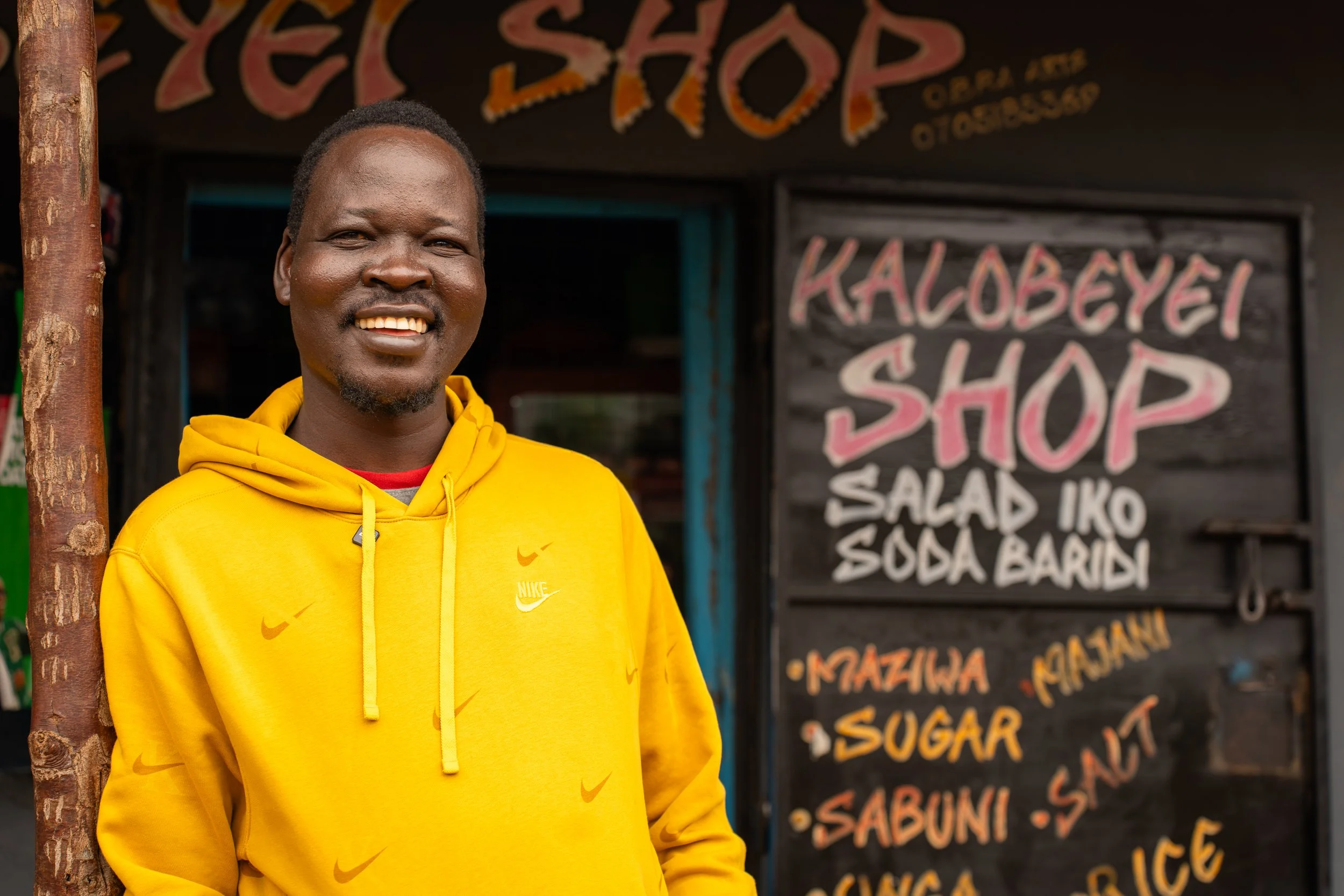
Ngwu, an Ethiopian refugee, poses outside his retail shop in Nairobi, Kenya. With a business grant from RefugePoint, he opened the shop, whose earnings now cover his food, house rent and shop rent.
Photo: Carolyne Njung’e | Nairobi, Kenya
Given these realities, advancing self-reliance is an absolute necessity. It’s also what refugees say they want. Achieving it requires removing legal and practical barriers to work, healthcare, housing, and education so refugees can rebuild their lives and contribute to host communities. However, policy reform alone is largely insufficient. Refugees also need targeted, strategic assistance to navigate complex legal environments and new socioeconomic structures, re-establish sustainable livelihoods, and keep their children in school.
For decades, traditional humanitarian response adhered to a camp-centric “care and maintenance” model. Assistance and the agencies delivering it was fragmented into single-need silos, from food to shelter to basic medical care. While efficient for acute emergency relief, this siloed approach was often ill-suited to address the complex, interconnected, and long-term challenges refugee households face. The global community, as demonstrated through commitments such as the Global Compact on Refugees, has recognized that assistance should adapt to these pressures by evolving from short-term relief into approaches that support people to become self-reliant in the medium and long term. However, shrinking humanitarian funding threatens to pull organizations back into short-term emergency aid, undercutting strategic investments in long-term self-reliance.
A Holistic, People-Centered Model: The Urban Refugee Protection Program (URPP)
RefugePoint’s Urban Refugee Protection Program (URPP) is one model of how assistance can lead to self-reliance in practice. It provides curated, individualized support to a household's specific, multidimensional needs: staff listen to and co-design plans with clients, use multidimensional measures of well-being, and respond with services that address not just a single need but the household’s reality more holistically.
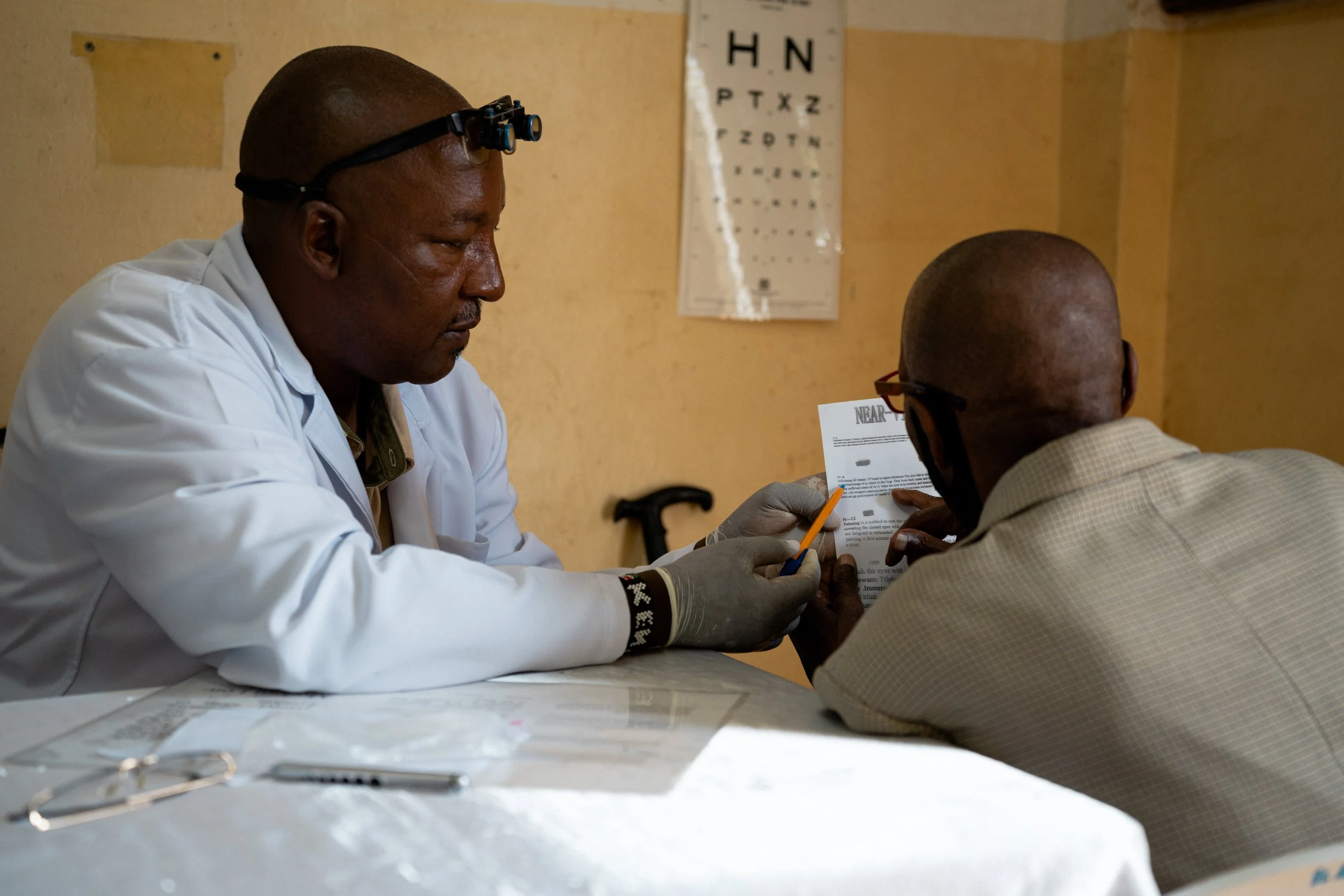
RefugePoint holds regular medical outreach events in neighborhoods across Nairobi where URPP clients live. Clients receive medical checkups, medication, and even vision tests and eyeglasses.
Photo: Chris Jensen | Nairobi, Kenya
In Nairobi, more than 118,000 refugees and asylum seekers navigate high living costs, informal labor markets, language barriers, and fragmented social safety nets, facing eviction, severe food insecurity, unaddressed health conditions, and exploitation. Both public and humanitarian services for these families are scarce.
To bridge the gap between emergency survival and long-term stability, the URPP provides a concrete, measurable, and deeply individualized pathway toward self-reliance. Rather than treating clients as passive recipients of aid, the URPP pairs each family with a dedicated caseworker (typically holding a social work degree) who serves as a long-term partner and trusted advocate. Together, they co-design a tailored trajectory towards self-reliance. RefugePoint measures household progress every six months using the Self-Reliance Index (SRI), with the average family reaching full self-reliance and graduating from assistance in about two years.
The URPP achieves its high graduation rates by deliberately pairing support that provides immediate stability (stabilization) with support that converts that stability into sustainable earning power (empowerment).
Stabilization
The URPP recognizes that self-reliance cannot take root when a family is in an active crisis. Caseworkers therefore coordinate a set of wraparound resources and supports to address acute needs:
Housing: Short-term rental assistance prevents evictions and provides a safe, dignified physical space for families.
Food and essential household goods: Providing basic support in kind or through cash resolves acute hunger and meets daily needs.
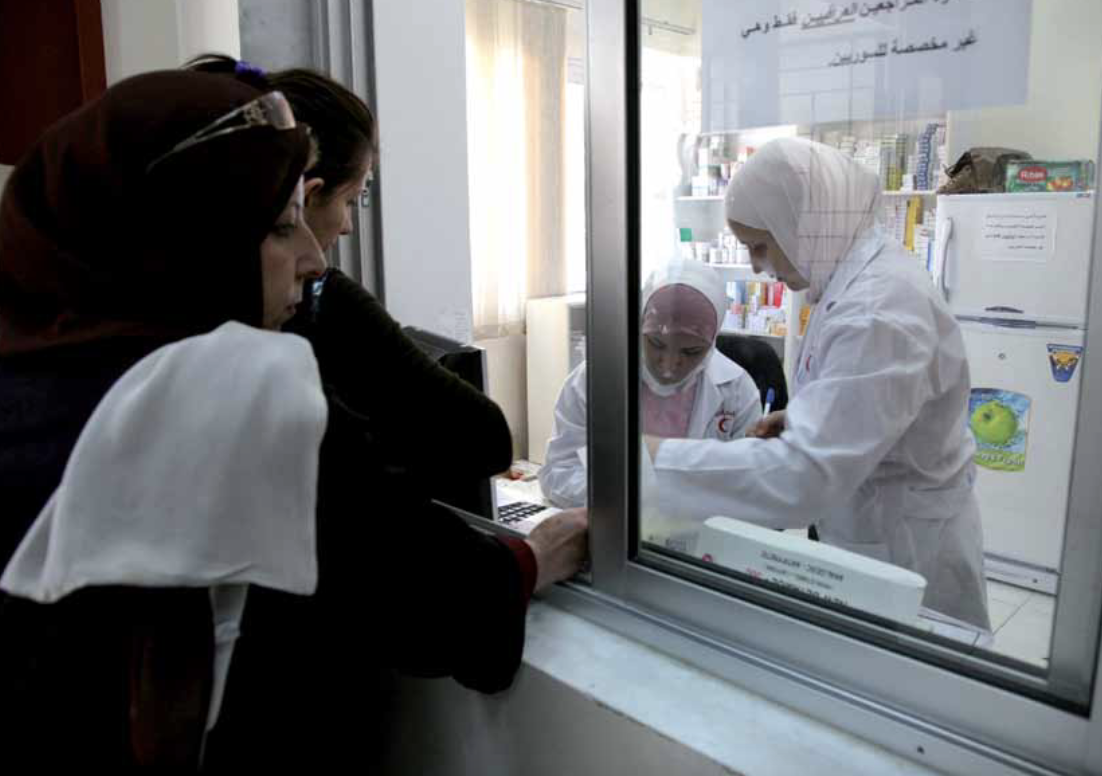
Physical and mental health: Access to clinical care, counseling, and specialized medical referrals strengthens physical and emotional well-being.
Child Protection: Assistance with school levies helps children return to and stay in school, supporting their development, well-being, and protection while giving parents and caregivers greater space to focus on their families’ longer-term stability.
By resolving these critical needs together, families regain the financial, physical, and psychosocial bandwidth necessary to plan for the future and strengthen their incomes.
Economic Empowerment
The URPP also layers economic tools onto stabilization services, equipping clients to meet their basic needs through earned income in the medium and long term. Elements of support include:
Business and financial training: Practical micro-enterprise management, financial literacy, and digital marketing skills tailored to urban market dynamics.
Capital seed grants: Direct micro-grants that allow clients to launch or scale viable, independent businesses.
One-on-one mentorship: Individualized business coaching and monthly progress monitoring to help entrepreneurs navigate market shifts and identify opportunities to strengthen competitiveness.
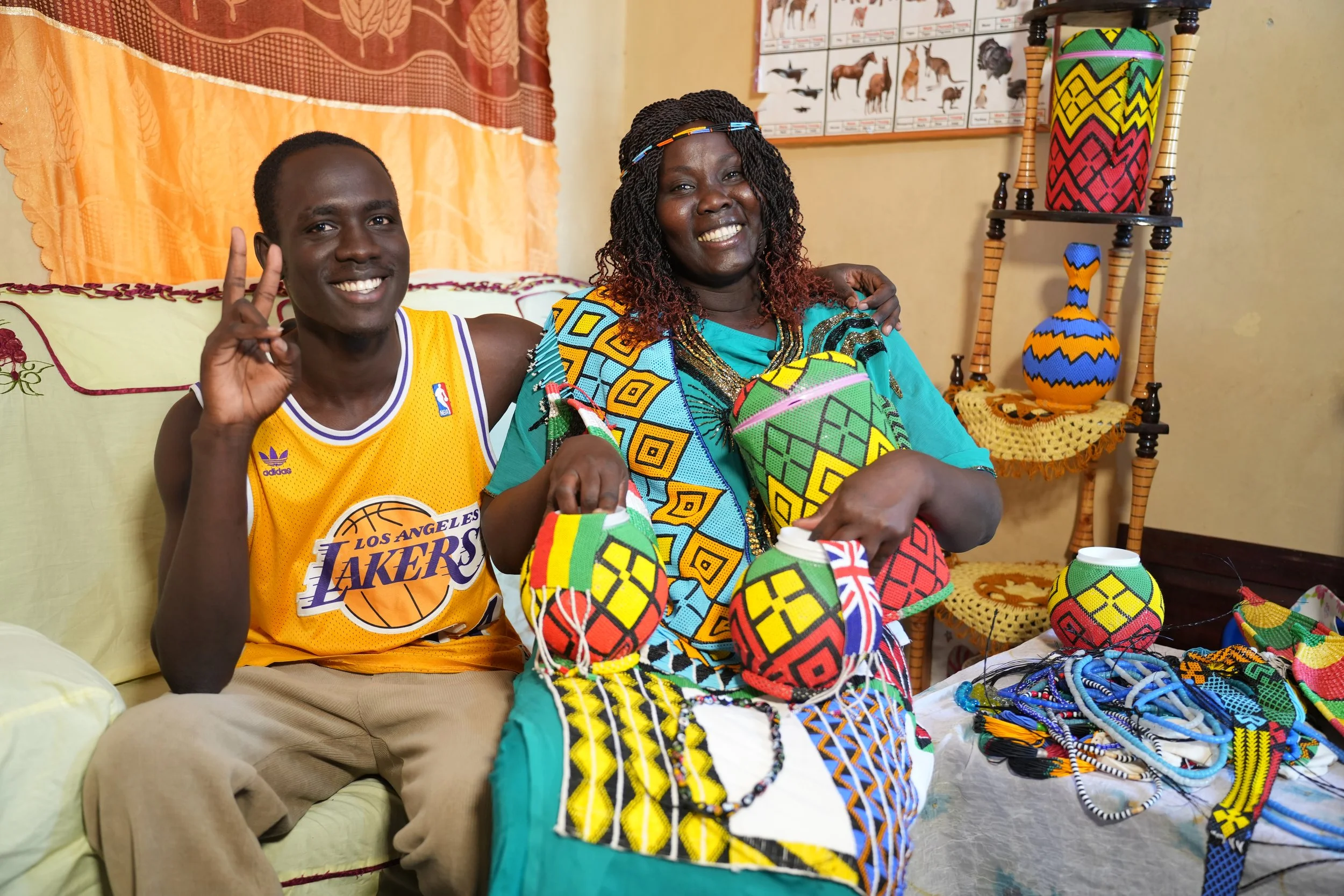
In 2022, Akach*, an Ethiopian refugee living in Nairobi, was referred to RefugePoint and began receiving rent assistance, food support, and medical care. Once she and her family were stabilized, Akach completed RefugePoint’s URPP Business Development Skills training and received a small cash grant to grow her small business selling beaded wares and traditional clothing. Today, all four of Akach’s children are in school, and her eldest son recently completed his secondary education.
*Name changed for protection.
Photo: Diana Karua | Nairobi, Kenya
How People-Centered Work Drives Results
Central to the URPP’s model is this relational, client-centered casework. Caseworkers listen, adapt, and troubleshoot alongside the client as challenges arise. Treating refugees as whole individuals—with unique skills, agency, and complex household dynamics—transforms the dynamic of humanitarian assistance from traditional aid to a mutual partnership. As one Congolese participant shared with RefugePoint: “They see you as a person, not a case file. They are very welcoming; they understand a family’s needs.”
This respect for human agency and individualized support directly translates into measurable self-reliance metrics in the URPP. Surveys among URPP clients in 2025 showed the following:
Financial independence: The proportion of clients with personal savings surges from just 7% at intake to 67% after six months, reaching 83% after one year.
Agency and security: Beyond economic metrics, client confidence and safety shift dramatically. The percentage of clients who felt safe enough to pursue all social, economic, and educational opportunities they desired rose from 17% at intake to 52% at six months, and climbed to 59% after one year.
Quality of life: A striking 98% of surveyed clients report that their overall quality of life improved as a direct result of their engagement with RefugePoint.
As global displacement remains high and resources stay tight, humanitarian and development leaders cannot afford to view assistance and self-reliance as in conflict. When designed to address holistic, individualized needs, assistance can be a fundamental safety net and launchpad for building self-reliance.
This blog post was published as part of the RSRI’s “12 Months, 12 Domains” campaign, a new learning and webinar series that takes a deeper look at the Self-Reliance Index (SRI), one domain at a time. Sign up for the RSRI newsletter to learn more →