Safety & Security: Essential for Refugee Self-Reliance

By Ned Meerdink
Training & Technical Support Manager | Refugee Self-Reliance Initiative
This blog post is a follow-up to the RSRI’s webinar on Domain 6 of the Self-Reliance Index (SRI) and focuses on the essential role safety plays in refugee self-reliance. It examines how the SRI measures the presence or absence of households’ safety and security, as well as how it measures the impact of safety on their self-reliance. It also explores some of the linkages between safety and self-reliance, and what becomes possible when refugees' safety and protection are observed and enforced in places of displacement.
Safety As a Precondition for Self-Reliance
Safety and security for refugees, in addition to being a right of all displaced persons, is a foundation and precondition for refugee self-reliance and well-being. It is no coincidence that the core theme of World Refugee Day 2026, which also marks the 75th anniversary of the 1951 Refugee Convention, is “Until Everyone Is Safe.”
Safety influences refugees’ ability to build sustainable and dignified lives across different displacement contexts. Rather than focusing on a single response sector, the Self-Reliance Index (SRI) takes a multidimensional, holistic view of households, considering a variety of domains, or key areas of life that affect a household’s ability to become self-reliant. The Refugee Self-Reliance Initiative (RSRI), developer of the SRI, explains in much greater detail how the various facets of household life explored in the SRI fit together to offer a clear picture of household self-reliance in its paper entitled, “Better Lives Now: A Conceptual Framework for Understanding and Measuring Refugee Self-Reliance.”
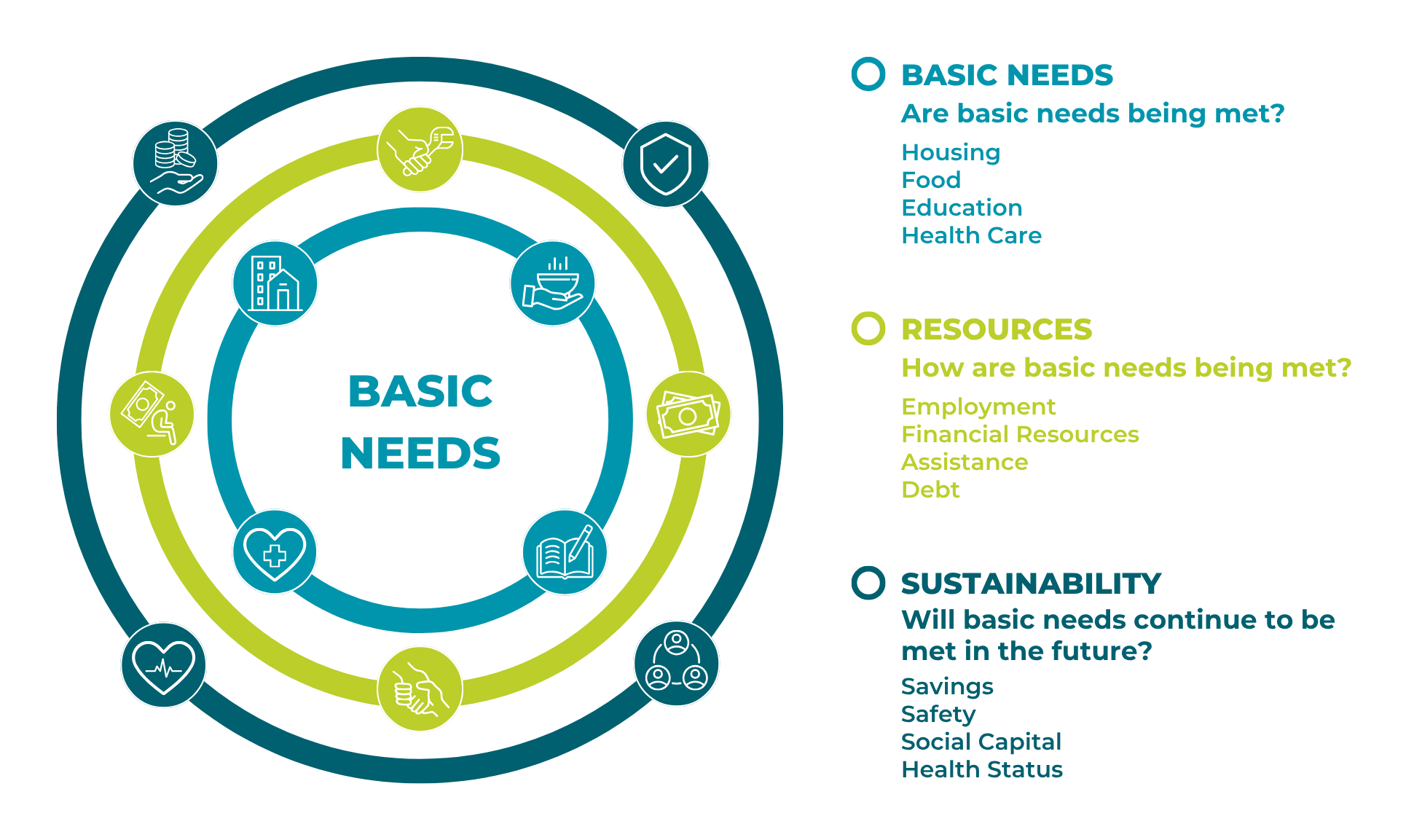
We all know that employment, another element of household life covered in the SRI, is essential to a refugee's ability to become self-reliant. We also know, and have widely demonstrated since the launch of the SRI in 2020, that education, another SRI domain, is a key enabler of a household’s trajectory towards self-reliance.
But how can someone consistently show up at work when they face daily harassment by police? How can a child reliably access the education essential for long-term self-reliance and social integration when they face violence or harassment on the way to school? And how can a household have the cognitive bandwidth and peace of mind to invest in their future when they live in an insecure dwelling that can be robbed at any time?
Safety is where the holistic nature and intersectionality among the 12 domains of the SRI are most visible, as a refugee household’s ability to progress across the individual domains often depends on the presence of basic safety and security in their place of displacement.
Safety in the Self-Reliance Index (SRI)
Since the launch of the SRI in 2020, the RSRI has explicitly recognized that safety is a prerequisite for refugees to access opportunities, meet basic needs, and sustainably improve their self-reliance. In other words, safety is treated as an enabling condition for self-reliance rather than merely a protection outcome. However, measuring key elements of client safety and the impact of safety and security conditions on their self-reliance has always been a complicated endeavor. In fact, operationalizing the Safety Domain has proved the most challenging element of the tool since its earliest days of development.
The RSRI’s Cycle 3 Learning Report, a reflection and learning document on the SRI’s performance between January 2022 and August 2024, comprehensively captures how our approach to measuring safety has evolved from the SRI's initial launch in 2020 (SRI 1.0) to the current version of the tool, SRI 3.0.
During the previous learning cycle (see: Cycle 2 Learning Report), key informant interviews, discussions with partners, and direct observations of the SRI's global use revealed a lack of a common understanding of how the Safety Domain is conceptualized and integrated into the tool. Additionally, while the domain captured a household’s perception of their safety and security, the previous version of the tool did not explicitly track the actual impacts of that safety environment.
Therefore, an intensive 24-month period of domain evaluation and testing to improve the version was undertaken, with support from partners including HIAS, Malteser International, RefugePoint, the International Rescue Committee, among others. Once developed and tested across a variety of contexts for reliability and validity, the new version of the Safety Domain was integrated into the current version of the SRI in August of 2024.
The domain was broken down into two questions.:
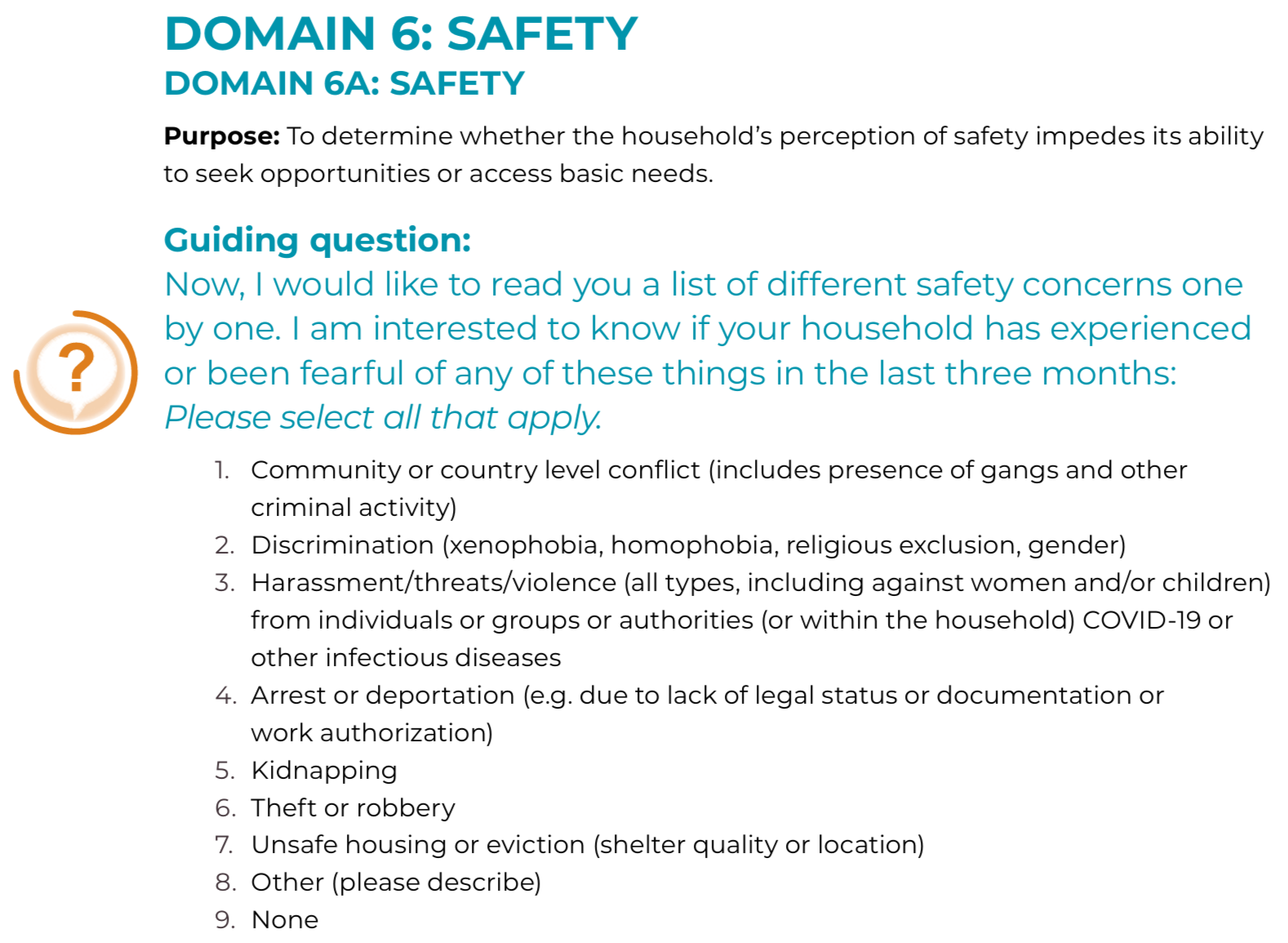
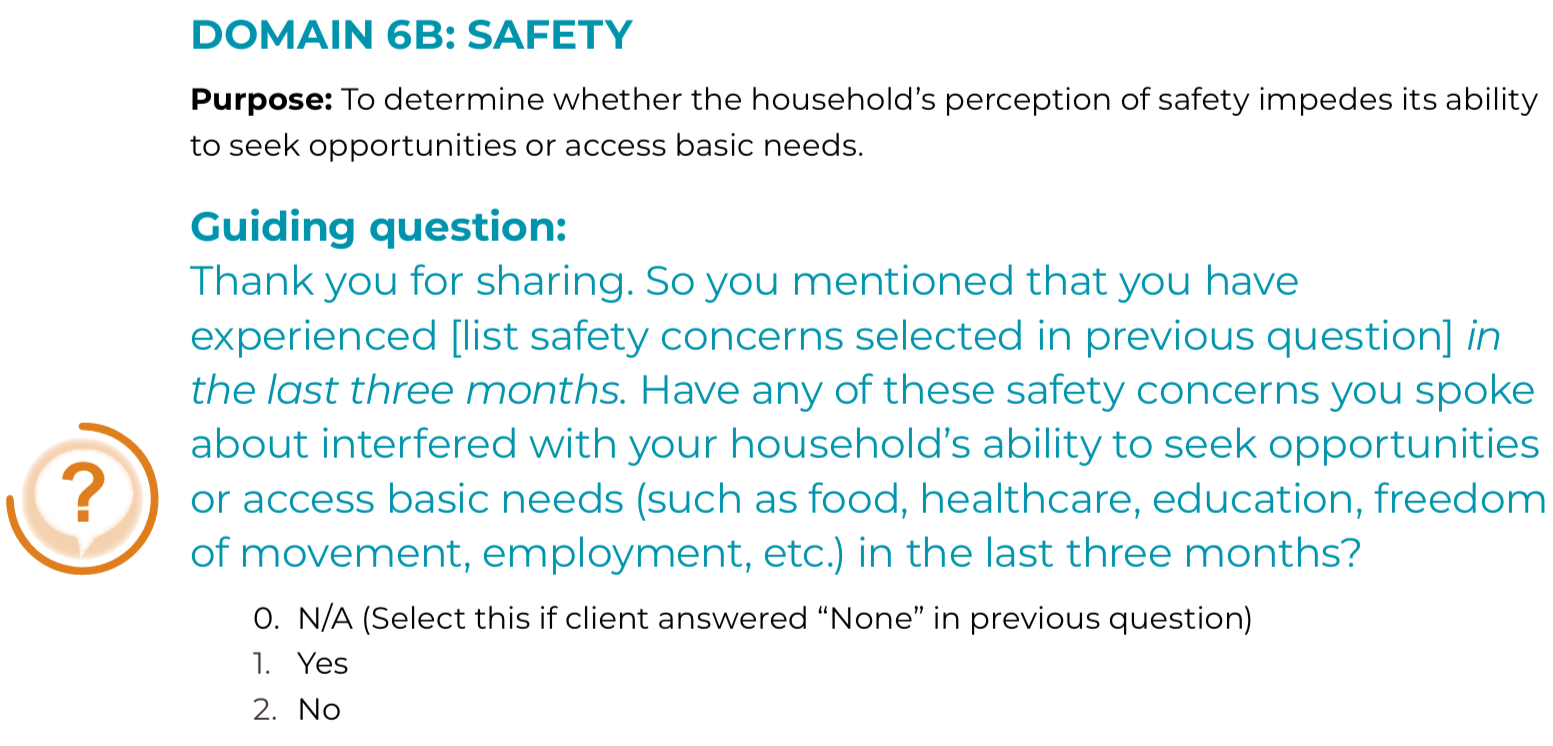
First, the domain assesses whether a household has exposure to or fear of a range of safety threats during the previous three months. Second, critically, it inquires about the real impacts of those safety threats, if present. The key idea is not just whether threats exist, but whether those threats prevent refugees from meeting their basic needs and pursuing self-reliance. Thus, the Safety Domain records these barriers and incorporates them into the overall SRI score, alongside domains such as housing, food security, health, employment, financial resources, and social capital. This allows the SRI to capture important non-economic dimensions of self-reliance, recognizing that a household may have income yet still struggle to become self-reliant if safety concerns restrict access to opportunities and services.
Finally, the improved version of the domain now allows practitioners to identify the specific safety concerns the household is facing and refer them to the appropriate services. This is key, given that practitioners/humanitarian agencies do not typically provide services across all sectors covered in the SRI. For example, someone who is fearful because of a previous trauma needs a much different type of referral or support than someone facing an ongoing protection concern, and the Safety Domain accounts for this in its current iteration.
The Big Picture on Safety and Self-Reliance
In our work with 88+ agency partners in 39+ countries where the SRI has been applied since its launch, we have established the essential role that safety plays in enabling refugees to become more self-reliant. Self-reliance, defined by the RSRI as the “social and economic ability of an individual, a household, or a community to meet its essential needs in a sustainable manner,” is often oversimplified as mere access to resources. The SRI’s holistic approach shows why that is incomplete.
Food, shelter, healthcare, water, sanitation, and education are all essential for survival and well-being, yet access to these services depends heavily on refugees' ability to safely reach and use them. Likewise, social integration and inclusion are primary pieces of the puzzle for becoming increasingly self-reliant, but it is only when refugees feel protected and safe that they can derive maximum benefit from engagement with host communities, participate in local organizations, build social networks, and work with others productively to help navigate the myriad challenges that refugees face on a daily basis.
A lack of safety and security can also have significant implications for refugee mental health and well-being, a topic that will be explored during next month’s installment of the RSRI’s “12 Months, 12 Domains” learning and webinar series. Constant insecurity over time can place severe strains on refugee mental health, reduce their capacity to plan for the future, stress intra-household relations, and render employment, school, and other factors that contribute to self-reliance out of reach.
Safety Creates Conditions for Self-Reliance
Self-reliance is always built on a foundation of safety and protection, and governments, donors, humanitarians, and host communities need to take this reality into account in their work and investments.
For practitioners, safety data should shape referrals, case management, and program design. For donors, safety should not be treated as separate from livelihoods, education, or inclusion programming; donors should fund integrated approaches. For governments and policymakers, self-reliance strategies cannot succeed without protection, legal status, access to justice, freedom of movement, and safety in communities, workplaces, schools, and housing.
This is one of the reasons the RSRI team and partners have been so focused on developing the best, simplest measure of safety and its impact on refugees within the SRI. One of the value-adds of the SRI is helping to make all of these linkages visible and measurable.
Improvements in refugee safety and protection create conditions for sustainable self-reliance. During this year’s run-up to World Refugee Day, it is important to reflect on why the theme “Until Everyone Is Safe” was selected and what we, as humanitarians, governments, donors, private-sector actors, and other stakeholders, need to do to improve refugee safety and protection.
The Refugee Self-Reliance Initiative (RSRI) is a strategic initiative of RefugePoint.
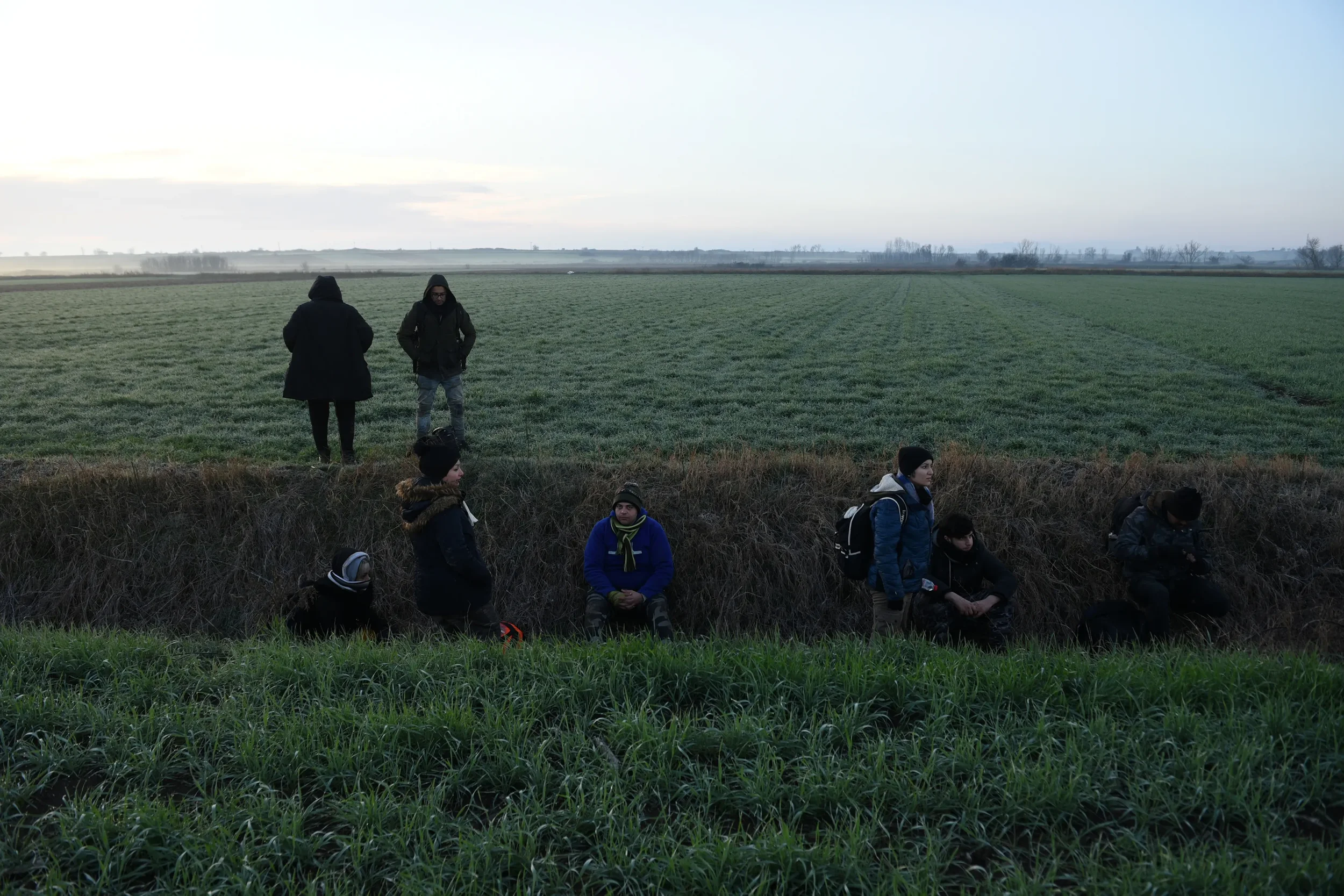
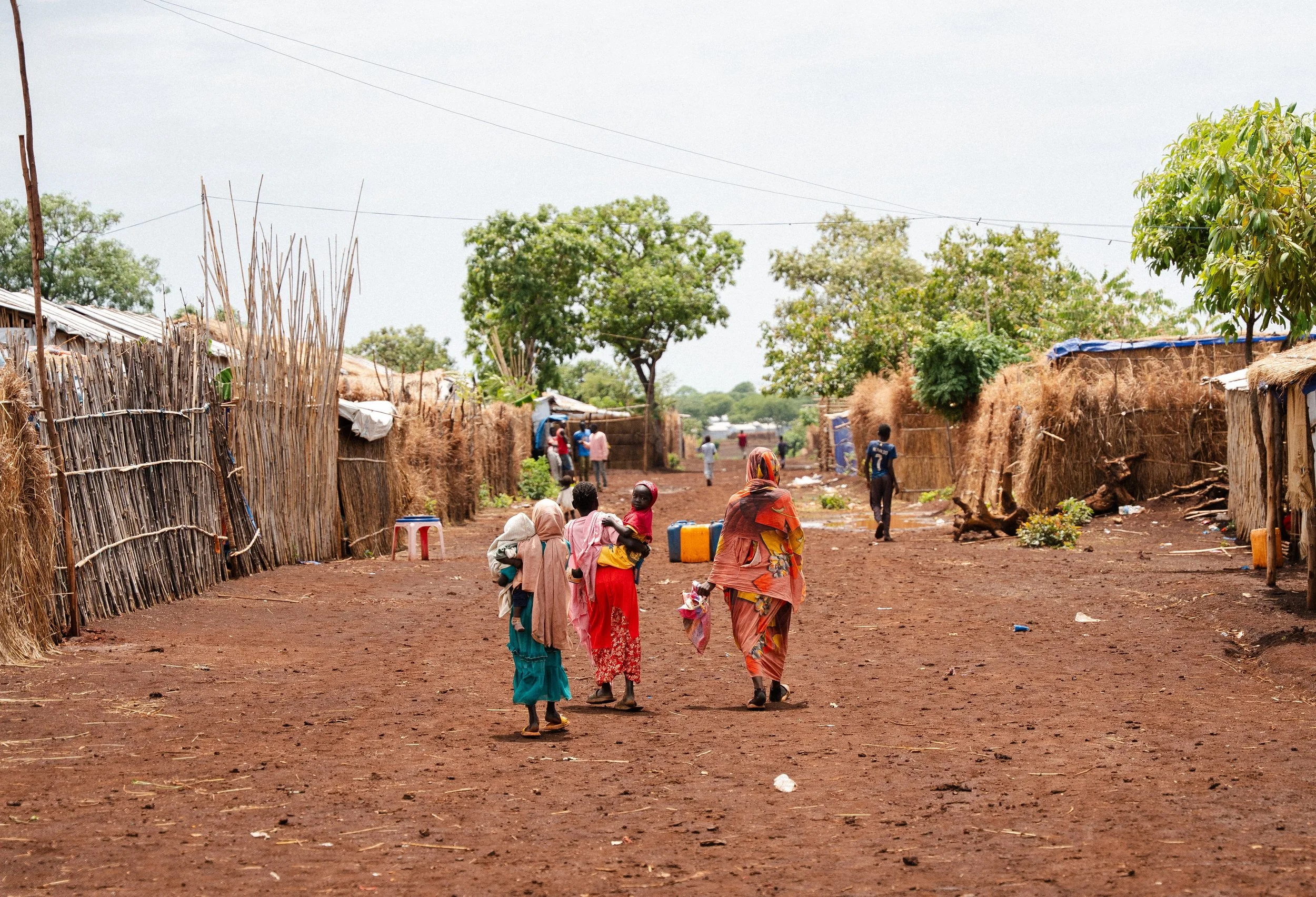
Featured Image: Chris Jensen, RefugePoint
This blog post was published as part of the RSRI’s “12 Months, 12 Domains” campaign, a new learning and webinar series that takes a deeper look at the Self-Reliance Index (SRI), one domain at a time. Sign up for the RSRI newsletter to learn more →