
Cash Assistance: A Vital Tool for Refugee Self-Reliance

By Holly Welcome Radice
Senior Policy Advisor and Regional Representative | CALP Network
Is there a silver bullet that can make refugees self-reliant in displacement? No. However, there is a tool that can connect immediate assistance with the conditions refugees need to become more self-reliant: cash assistance.
Cash assistance alone will not make refugees self-reliant, but it can help create the conditions for self-reliance.
The United Nations High Commissioner for Refugees (UNHCR), much like the Refugee Self-Reliance Initiative (RSRI), defines self-reliance as “the social and economic ability of an individual, a household, or a community to meet essential needs in a sustainable manner and with dignity.” UNHCR also emphasizes that achieving self-reliance requires involving communities in decision-making and recognizing refugees as active partners rather than passive recipients. This approach to self-reliance aligns closely with the spirit of cash assistance.
Cash assistance is among the most flexible forms of aid. It can support more dignified assistance by giving people greater choice and control, and it is one of the most cost-efficient ways to deliver aid. And, importantly, most crisis-affected people prefer it.
But can cash assistance support refugee self-reliance? Yes and no. Cash assistance alone will not make refugees self-reliant, but it can help create the conditions for self-reliance. What matters is how it is designed, delivered, and integrated with broader efforts to support refugees’ economic and social inclusion. No single model fits all.
Here are seven reasons why you should be thinking about cash assistance if you work on refugee self-reliance:
Meet immediate needs
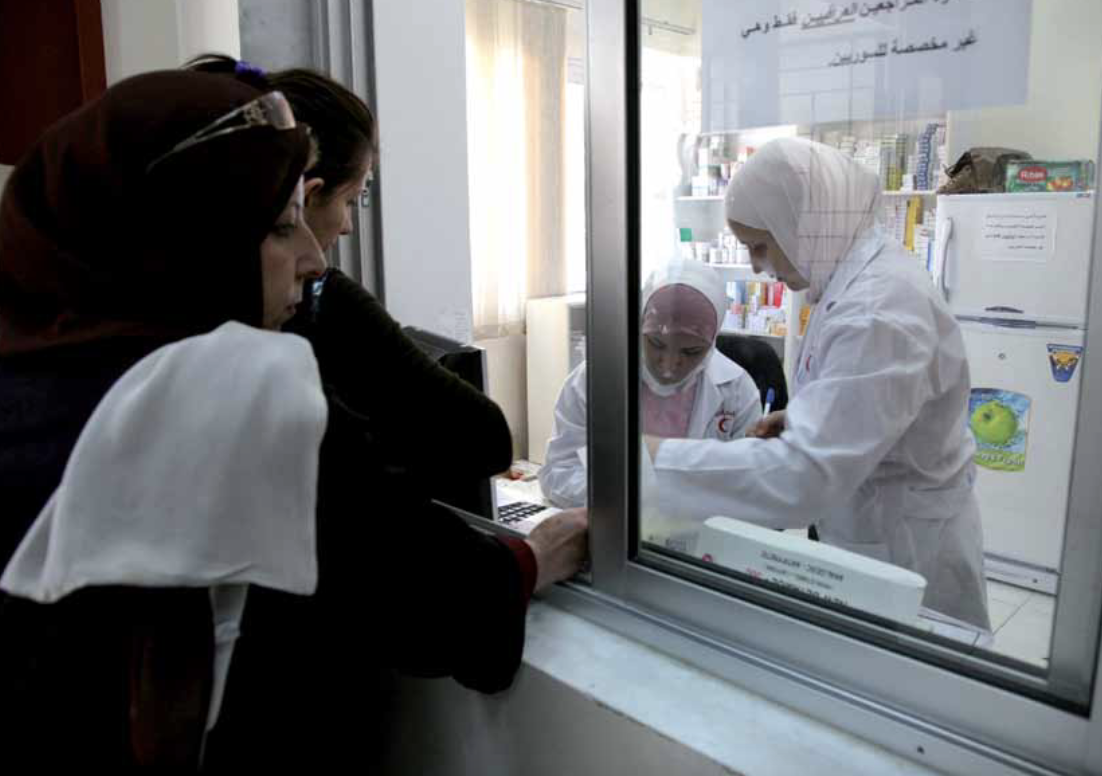
Cash assistance’s ability to help people meet immediate, basic needs is well documented. Some refugee families may need it to buy food, others to pay rent, and others to access critical healthcare. Because recipients decide how to use the assistance based on their own circumstances and priorities, cash gives people greater choice and agency in meeting their needs. Cash assistance can also help reduce reliance on negative coping mechanisms. When people can meet their basic needs without resorting to harmful coping strategies, they are better positioned to protect their assets, maintain stability, and focus on longer-term priorities.
Strengthen refugees’ agency
Self-reliance is fundamentally about people’s capacity to make decisions and act on them. Cash assistance can strengthen this capacity by giving refugees greater control over how, when, and where they use their resources. Rather than receiving goods or services selected on their behalf, refugees can allocate resources according to their own priorities and respond to the needs and opportunities that matter most to them. As one UNHCR cash assistance recipient put it, “what we buy is no longer imposed on us.”
Support local economies
Refugees’ immediate needs can often be met by other refugees who offer goods and services in the same communities. Refugees receiving cash spend much of it in nearby markets, creating demand within the communities where they live. For example, in two Ugandan refugee settlements where World Food Programme (WFP) assistance was entirely in cash, 88–97% of refugee household spending went to retail and services, with most expenditures made in shops in nearby markets. By enabling refugees to participate in local markets as consumers, cash assistance keeps money circulating in the local economy and supports the businesses and services refugee communities rely on.
Secure essential documentation
Refugees can use cash assistance to cover the costs of documents that help regularize their status and access to services. Once a refugee has such documentation, it can open opportunities for dignified work or education. In Iraq, for example, INTERSOS piloted a cash-for-documentation assistance model in support of the Iraqi National Refugee Education Integration Policy, enabling Syrian refugee students to obtain the documentation needed to enroll in formal education.
Build dignified livelihoods
Cash assistance can help refugees improve their livelihoods and build a pathway toward greater self-reliance. When paired with training and other livelihood support, cash can enable refugees to invest in productive assets and income-generating activities. For example, when Caritas Rwanda provided cash assistance alongside training to support income-generating activities among refugees and host community members, 93% of participating businesses operated profitably. Evidence from a Randomized Controlled Trial (RCT) in Uganda similarly found that large-scale cash transfers to South Sudanese refugees increased asset holdings and led to the establishment of more businesses.
Expand access to financial inclusion
How cash assistance is designed can connect refugees to opportunities for financial inclusion. This can be done by choosing a delivery mechanism that lets recipients save or connect to other financial products. For example, the WFP in Zambia distributed cash assistance to Congolese refugees through a digital payment platform that delivered funds directly to bank accounts or mobile wallets. Cash assistance can also be paired with financial literacy training to help refugees build the knowledge and confidence to use financial services effectively. In Colombia, for example, World Vision provided financial education alongside cash assistance to Venezuelan migrants and refugees, with participants reporting increased income and greater financial autonomy. By connecting cash assistance to financial services and financial capability, programs can help refugees strengthen their ability to save, manage resources, and make financial decisions.
Put resources behind refugee-led solutions
Cash assistance in the form of Group Cash Transfers can address community needs and support activities that foster social cohesion. In Uganda, ZOA implemented Group Cash Transfers with refugees and host communities around the Kiryandongo Refugee Settlement. ZOA found that this type of cash assistance shifted decision-making power to the communities and supported longer-term resilience. By putting resources and decisions directly in the hands of refugee communities, Group Cash Transfers can support locally led action and enable communities to address their own priorities.
Cash assistance alone cannot provide the holistic support refugees need, but it can play a critical role within a more robust support package that connects people to services, psychosocial support, protection, and opportunities for dignified work. It can also build social cohesion between refugees and their host communities - and it can do so quickly, efficiently, and in ways refugees want. If refugee self-reliance is the goal, cash assistance should be considered as part of the solution.
This blog post was published as part of the RSRI’s “12 Months, 12 Domains” campaign, a new learning and webinar series that takes a deeper look at the Self-Reliance Index (SRI), one domain at a time. Sign up for the RSRI newsletter to learn more →